
A bathroom can look beautiful in a showroom and still disappoint at home if the layout is awkward, the storage is insufficient or the fitting lacks precision. A successful bathroom installation brings every element together: the practical details behind the walls, the proportions you experience every day and the finishes that make the room feel truly yours.
For homeowners investing in a refurbishment, this is rarely just a question of replacing a bath or choosing new tiles. It is an opportunity to create a quieter, more organised start and end to the day, while adding lasting appeal to the home.
Bathroom installation starts with how you live
The best bathroom designs begin with honest questions. Who uses the room, at what times, and what currently causes frustration? A busy family bathroom needs a different approach from a peaceful principal ensuite. A compact period cottage may call for clever space planning, while a generous contemporary home may have room for a freestanding bath and a statement walk-in shower.
Daily routines should shape the layout before finishes are considered. If two people are getting ready at once, a double basin may be worthwhile, but only if it does not compromise circulation or leave too little worktop space. If bathing is a priority for young children, a shower-over-bath arrangement can be the sensible choice. For many households, however, a properly sized shower with an easy-access tray offers greater day-to-day value than a bath used only occasionally.
Storage deserves the same attention. Recessed niches, mirrored cabinets, vanity units and well-placed tall cupboards can keep essentials close to hand without cluttering the room. The aim is not to fill every wall. It is to give each item a considered place, allowing the room’s materials and proportions to breathe.
Making the most of difficult spaces
Sloping ceilings, alcoves, uneven walls and inherited pipework are common in rural and period properties across Cumbria, the Lake District and surrounding areas. These features do not rule out a refined bathroom, but they do require careful measurement and experienced planning.
A made-to-measure solution may be preferable where standard furniture wastes valuable space. Equally, moving a toilet or shower can transform a layout, yet it may involve additional drainage work and cost. There is no universal answer: the right decision balances visual improvement, practical benefit and the realities of the property.
The details behind a lasting bathroom installation
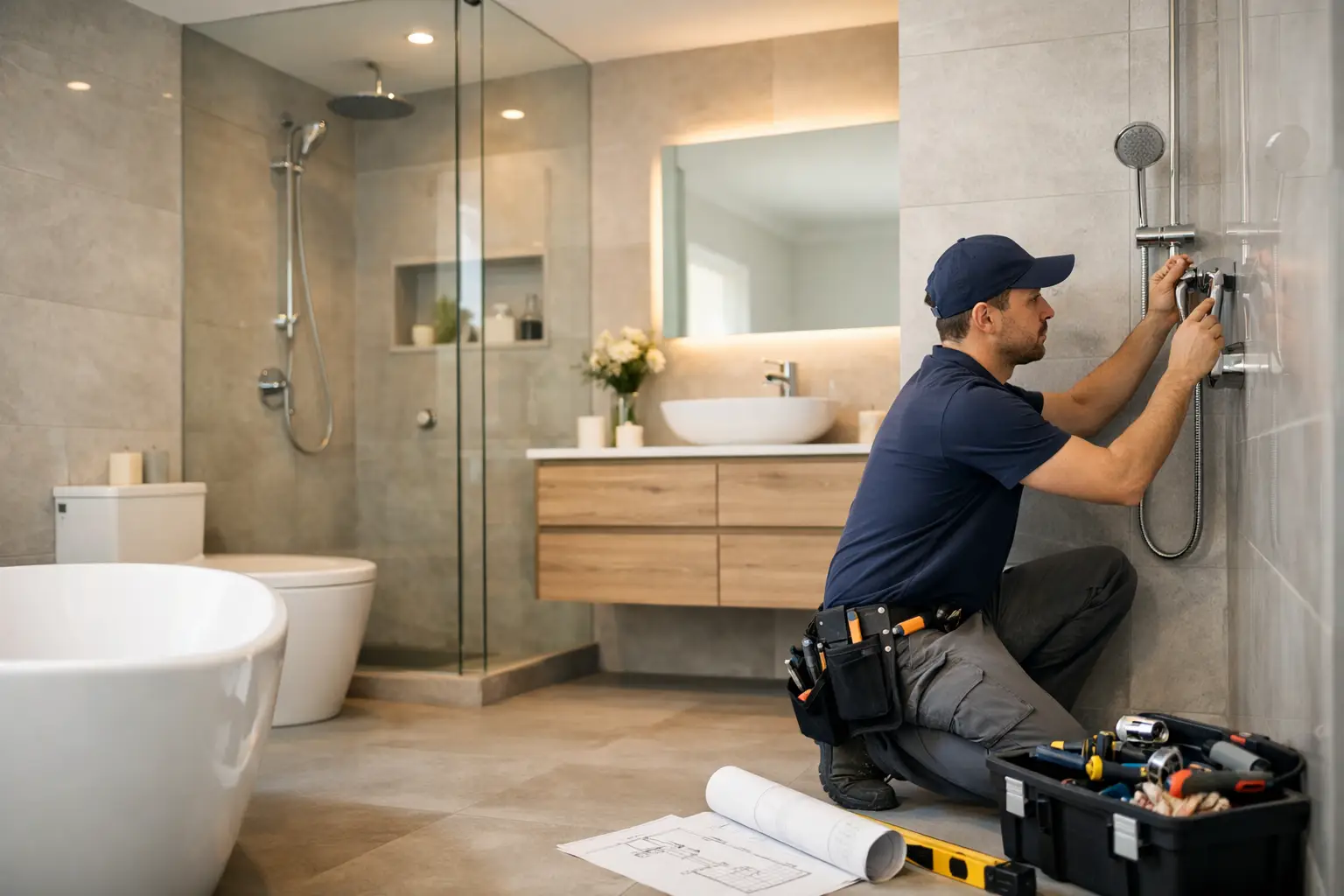
Much of the quality in a bathroom is hidden once work is complete. Plumbing connections, electrics, ventilation, wall preparation and waterproofing all influence how well the space performs over time. A room that has been designed around beautiful brassware and porcelain still needs a sound foundation.
This is why an installation should be planned as a complete project rather than a collection of separate purchases. A shower enclosure must work with the tray, tile thickness and wall construction. A wall-hung vanity requires the correct support behind it. Lighting needs to be positioned for both atmosphere and practical tasks, particularly around mirrors.
Ventilation is often overlooked until condensation becomes a problem. In a bathroom without adequate extraction, moisture can affect paintwork, grout, timber finishes and even the comfort of the room. The appropriate solution depends on the size of the space, whether there is a window and how the bathroom is used, but it should be addressed from the outset rather than treated as an afterthought.
Waterproofing is not a visible luxury
Wet areas need professional preparation before tiles are fixed. A properly tanked shower area helps protect the structure behind the finish, especially in rooms with high daily use. It is one of those essential investments that does not announce itself in photographs, but gives confidence long after installation day.
The same principle applies to tile setting and grouting. Large-format porcelain can create a calm, expansive look with fewer grout lines, but it demands suitably flat walls and floors. Natural stone offers wonderful character, yet it needs the right care and sealing regime. Smaller tiles can introduce texture and pattern, although more grout lines may mean more cleaning. Material choices should feel luxurious, but they should also suit the level of maintenance you are happy to undertake.
Choosing finishes with confidence
A coherent bathroom does not need every finish to match exactly. In fact, thoughtful contrast often gives a design its character. Warm timber tones can soften polished stone-effect porcelain. Brushed nickel can feel quietly timeless against painted furniture, while aged brass brings depth to classic schemes.
The most successful rooms usually have a clear visual hierarchy. Perhaps the vanity is the focal point, perhaps it is an expressive tiled shower wall or a sculptural bath. Once that feature is established, the surrounding elements can support it rather than competing for attention.
Lighting plays a decisive part in how colour and texture are perceived. Layered lighting is more flexible than relying on one central ceiling fitting. Gentle ambient light creates a welcoming mood, focused task lighting makes shaving and make-up easier, and discreet feature lighting can add drama to a niche or vanity area. Where possible, specify fittings with an appropriate rating for their location in the room and use an experienced installer to ensure safety.
A managed process brings reassurance
Bathroom projects involve a number of stages, from removing the existing suite to first fix plumbing and electrics, wall preparation, tiling, fitting furniture and completing final details. Coordinating these trades independently can be demanding, particularly when deliveries, access and timings need to align.
A managed design, supply and installation service gives the project a single, accountable direction. It allows decisions to be made early, products to be selected with the layout in mind and the installation sequence to be carefully organised. This does not mean there will never be surprises, particularly in older homes where conditions behind walls are unknown. It means any issues can be handled with a clear plan and informed communication.
Before work begins, ask what is included, how the room will be protected during the project and what happens if unexpected remedial work is discovered. It is also sensible to discuss lead times for key pieces such as furniture, brassware and specialist tiles. A realistic programme is more reassuring than a rushed promise.
When should you renovate?
A bathroom does not have to be failing completely before it is worth improving. Poor storage, dated finishes, inefficient use of space and persistent condensation can all make everyday life less enjoyable. Renovating before fittings begin to leak or surfaces deteriorate gives you more freedom to plan calmly, select what you really want and schedule work around family life.
If the room is structurally sound and the layout already works, a focused refresh may be enough. New brassware, a vanity, lighting and decoration can make a marked difference. Where plumbing is unreliable, the room feels cramped or the style no longer reflects the rest of the home, a full redesign is often the better long-term choice.
Creating a bathroom you will enjoy for years
Trends can offer useful inspiration, but a bathroom is most successful when it feels right for the house and the people using it. Timeless foundations such as well-proportioned furniture, quality sanitaryware and durable surfaces allow you to introduce personality through colour, mirrors, lighting and accessories.
For a home of character, that may mean honouring original details while introducing contemporary comfort. For a new-build or modern extension, it may mean adding warmth through natural textures and carefully chosen metal finishes. Luxury is not about adding more. It is about making every choice feel intentional.
At Lakeland Bespoke Interiors, bathroom projects are approached as complete transformations, designed around the home and fitted with care. Begin with the way you want the room to feel each morning and each evening. That simple thought will guide the decisions that matter most.