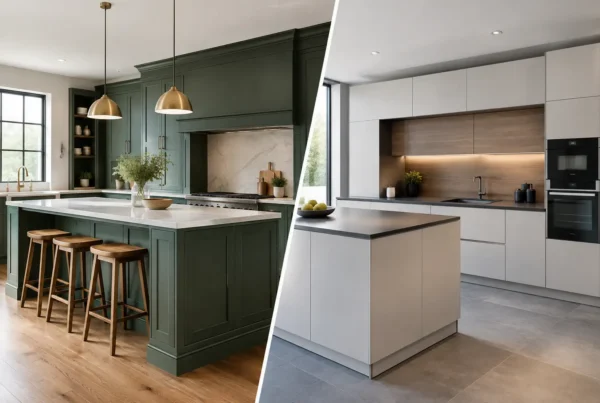

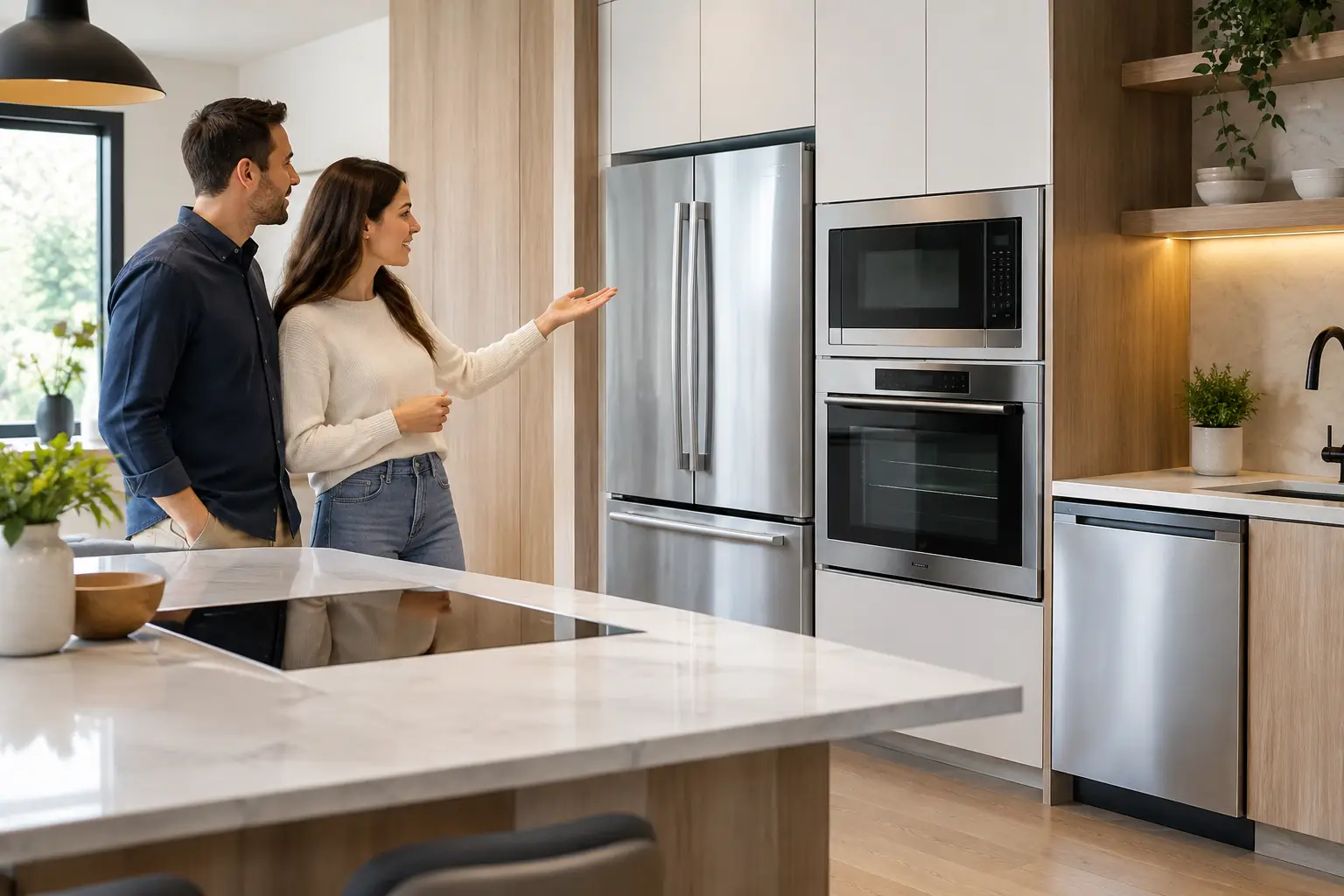
A beautifully fitted kitchen can be undermined by one poorly planned appliance door, an awkward fridge opening or a dishwasher that interrupts the flow of the room. This integrated appliance buying guide is designed to help you make decisions that protect both the appearance and everyday practicality of your new kitchen.
Integrated appliances sit behind cabinetry panels so that the kitchen reads as one considered design, rather than a collection of separate products. They suit everything from contemporary handleless spaces to classic painted kitchens, but they need to be selected early. Cabinet sizes, door styles, ventilation, electrical provision and the way you use the room all affect what will work well.
Start with how your kitchen will be used
Before comparing appliance specifications, consider the routines your kitchen needs to support. A busy family kitchen may benefit from a large integrated fridge freezer, a quiet dishwasher and flexible oven capacity. For a couple who enjoy entertaining, a wine cooler, warming drawer or second oven may be more valuable than maximising refrigeration.
Think, too, about the character of the property. In a period home, fully integrated appliances can preserve the calm, furniture-like quality of a traditional kitchen. In a contemporary extension, they can create long uninterrupted runs of cabinetry and allow architectural details, materials and lighting to take the lead.
The aim is not to conceal every appliance simply because you can. It is to choose a layout that feels composed while making daily tasks easier. A well-positioned tall fridge freezer near the entrance, for example, makes unpacking shopping far less disruptive. A dishwasher close to the sink and crockery storage keeps clearing away simple.
Integrated, built-in and freestanding: know the difference
These terms are often used interchangeably, but they describe different approaches. An integrated appliance is designed to sit within a cabinet and carry a matching furniture door. A built-in appliance may be housed within cabinetry but remain visible, as with a stainless-steel oven or a coffee machine. A freestanding appliance stands independently and is usually visible from the room.
Integrated refrigeration and dishwashers are especially popular where visual continuity matters. Ovens, microwaves, steam ovens and coffee machines are generally built in rather than integrated, becoming intentional focal points within a tall bank of cabinetry.
There is a trade-off. Integrated models may offer slightly less internal capacity than comparable freestanding options, particularly with fridge freezers. They can also cost more to install and replace, because the furniture door and cabinet dimensions must be compatible. For many homeowners, the quieter visual effect is well worth this consideration, but capacity should be assessed honestly at the planning stage.
Choose refrigeration for real life, not just the brochure
Refrigeration is often the hardest appliance category to get right because it affects every day. Start by deciding whether you need a standard integrated fridge freezer, separate full-height fridge and freezer units, or a larger freestanding statement model.
A 70/30 split gives more space to fresh food, while a 50/50 arrangement offers greater freezer capacity. Neither is automatically better. If you cook from fresh ingredients several times a week, a larger fridge section is usually more useful. If you batch-cook, stock up for school holidays or live some distance from larger shops, freezer drawers may take priority.
Pay attention to door hinges. Fixed-hinge systems connect the furniture door directly to the appliance door and tend to provide a more solid, refined action. Sliding-hinge systems allow the furniture door to move separately on runners. Both have their place, but the hinge type must suit the cabinet and selected appliance.
Also check the opening angle. A fridge freezer tucked against a wall may not open wide enough for drawers to pull out comfortably. This small detail is much easier to resolve on a design plan than after fitting.
Ventilation is not optional
Appliances generate heat and need the correct airflow around them. Refrigeration in particular must be installed to the manufacturer’s requirements, with suitable vents and clearances. Trying to hide ventilation completely can reduce efficiency, shorten the appliance’s lifespan and cause performance issues.
Good kitchen design incorporates ventilation discreetly, whether through plinth grilles, purpose-designed channels or cabinetry details that suit the overall scheme. It should feel considered, not like an afterthought.
Select ovens around the way you cook
A single oven is sufficient for many households, especially when paired with a combination microwave. However, a double-oven arrangement can make hosting easier, allowing one oven to manage a roast while another handles side dishes or desserts.
The most popular arrangement in a bespoke kitchen is often a full-size oven at a comfortable height, with a compact combination microwave or steam oven above or below. This avoids bending to lift heavy dishes and creates a practical tall-unit composition.
Steam ovens appeal to keen cooks because they can retain moisture in fish, vegetables and bread, while combination models offer flexibility without adding another large appliance. Pyrolytic cleaning functions are worth considering if low-maintenance ownership is high on your list. During the cleaning cycle, the oven heats to a very high temperature and reduces residue to ash that can be wiped away once cool.
Induction hobs are fast, responsive and easy to clean, making them a strong choice for many modern kitchens. They require compatible pans and appropriate electrical supply, however. Gas remains a preference for some cooks, though it changes the ventilation and safety considerations. The right choice comes down to cooking style, the existing property services and the finish you want around the cooking zone.
Do not underestimate dishwasher noise
An integrated dishwasher keeps the cabinetry line clean, but its sound level can have a significant effect on an open-plan room. Look at the decibel rating, particularly if the kitchen shares space with dining, working or relaxing areas. A difference of only a few decibels can be noticeable during an evening meal or a quiet conversation.
Capacity matters as much as noise. A standard 60cm dishwasher generally suits family homes, while a slimline model can be sensible in a compact kitchen where every cabinet has a job to do. Internal layout varies considerably between brands, so adjustable racks, a dedicated cutlery drawer and space for larger pans can be more useful than a headline place-setting figure.
If you plan to run the dishwasher overnight, consider delayed-start and eco programmes. These can help manage energy use, though the most economical setting is often longer than people expect. That is normal: gentler, slower cycles typically use less energy and water.
Plan extraction as part of the design
Extraction is one of the most visible technical choices in a kitchen. A statement canopy hood may suit a range cooker in a classic kitchen, while a concealed canopy can preserve a simpler furniture run. Downdraft and venting hob systems offer a clean contemporary look, particularly around an island, but they require careful planning for ducting and may reduce cupboard space below.
External extraction is generally more effective at removing moisture and cooking odours, provided the duct route is practical. Recirculating systems can be a useful alternative where external ducting is not possible, but filters need regular replacement or regeneration. The best option depends on the property, the layout and how intensively you cook.
In rural homes across Cumbria, the Lake District and surrounding areas, the route for ducting can be particularly relevant in older stone properties or homes with limited access through external walls. Discussing this before cabinetry is finalised avoids compromises later.
Build in the details that make appliances feel effortless
The most successful schemes allow space for the less glamorous essentials. Consider where small appliances will live, how they will be powered and whether they should be visible. A breakfast cupboard with internal sockets can keep a toaster and coffee machine ready to use without permanently occupying the worktop.
Think about bins early as well. Integrated waste and recycling storage near the sink or preparation area makes cooking more pleasant and helps keep the room tidy. If you are including a boiling-water tap, wine cooler or laundry appliance, those choices affect plumbing, electrical requirements and cabinet planning.
Door alignment also deserves care. Integrated appliances must be fitted precisely so reveals are even, doors open freely and the cabinetry retains its tailored appearance. This is where experienced design, supply and installation become particularly valuable: the appliance specification and furniture design are treated as one project, rather than separate purchases that must somehow be made to fit.
An integrated appliance buying guide: questions to ask
Before committing to your appliance package, ask whether each product fits the cabinet dimensions, hinge arrangement and ventilation requirements. Confirm the electrical load, water connections and drainage needed, particularly in an older property. Check lead times as well, since a delayed appliance can hold up a carefully planned installation.
It is also sensible to weigh the value of matching brands against choosing the best individual appliance for each task. A coordinated suite can look pleasing and may make controls feel familiar, but it should not force you into a fridge, dishwasher or extraction system that does not suit your household.
At Lakeland Bespoke Interiors, appliance choices are considered alongside the room’s proportions, materials and practical needs from the outset. That joined-up approach creates a kitchen that looks calm on the day it is fitted and continues to work beautifully long after the novelty has passed.
The most rewarding choice is rarely the appliance with the longest feature list. It is the one that quietly supports the way you live, leaving the design of your kitchen free to feel personal, elegant and enduring.