
A beautiful bathroom should feel effortless when you use it, not merely look impressive in a photograph. When considering a wet room versus shower room, the right choice comes down to more than personal taste. The room’s proportions, the people using it, the property itself and the level of finish you expect all shape the answer.
Both can create a calm, luxurious place to begin and end the day. Yet they offer distinctly different experiences. One creates an open, architectural look with uninterrupted flooring; the other gives you a defined showering space with familiar comfort and greater containment. Understanding the difference early helps avoid costly compromises once a refurbishment is under way.
Wet room versus shower room: the essential difference
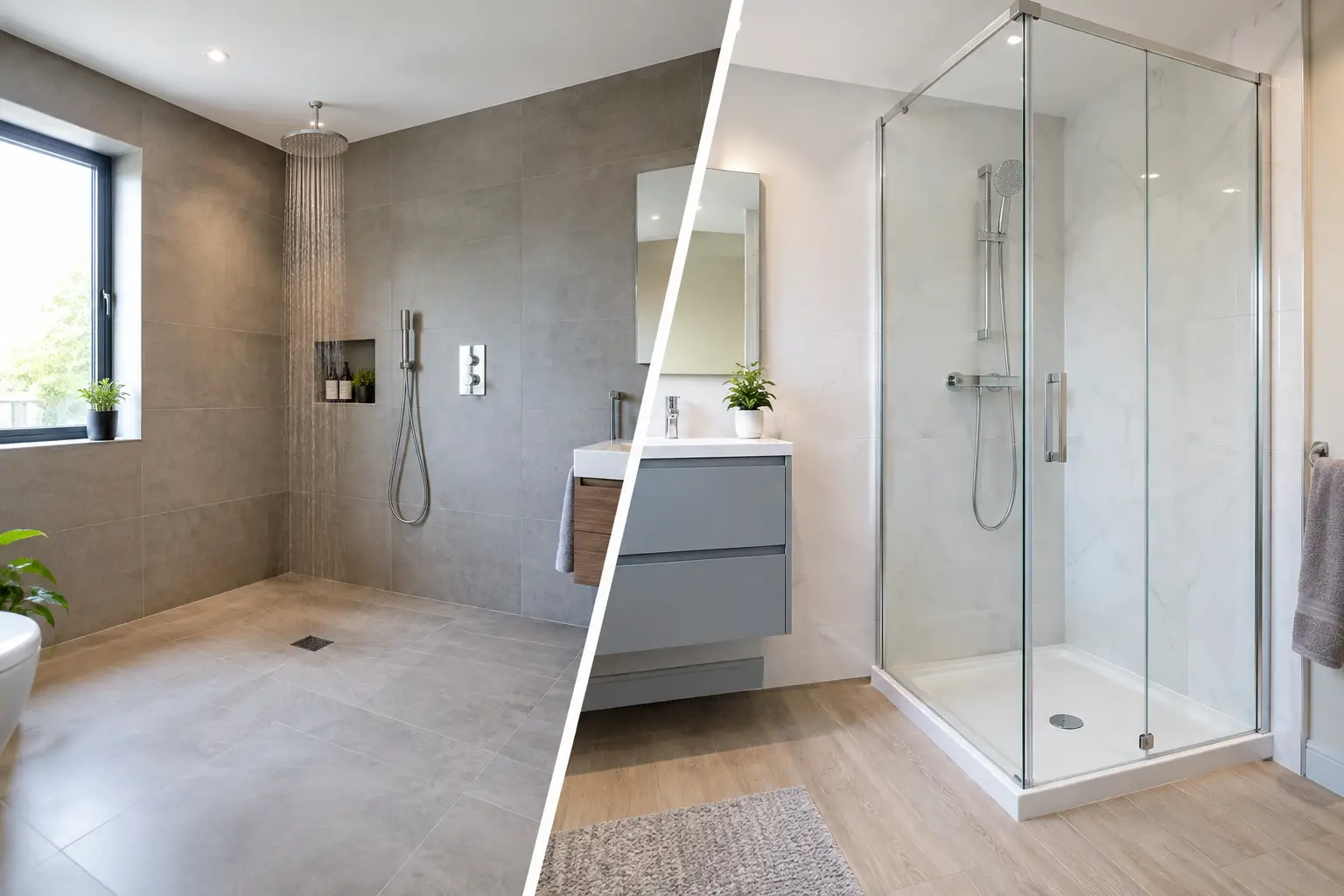
A wet room is a fully waterproofed bathroom where the floor is designed to receive water and guide it towards a drain. The shower area is usually open, perhaps with a fixed glass screen, rather than enclosed by a tray and full shower cubicle. The floor is gently formed to fall towards the waste, while the walls and floor are tanked beneath the surface finishes to protect the structure of the home.
A shower room is a bathroom centred around a separate shower enclosure or shower tray. It may be compact and practical, or generously proportioned with a walk-in shower and frameless glass. The key distinction is that water is contained within a designated showering zone, leaving the rest of the floor dry in normal use.
Neither approach is inherently more luxurious. A well-designed shower room can feel exceptionally refined, while a poorly planned wet room can be frustrating to live with. The quality lies in the proportions, materials, drainage and fitting detail.
What a wet room offers
The appeal of a wet room is visual freedom. Continuous porcelain, natural stone-effect or microcement-style flooring can make a small ensuite feel wider and more composed. Without the line of a raised tray, the room has a clean, considered quality that suits contemporary homes particularly well, although it can look equally at home in a sensitively updated period property.
It is also an excellent option where level access matters. With no step into a shower tray, a wet room can be easier for young children, older family members or anyone planning to remain in their home for the long term. A carefully positioned shower screen can preserve this open feel while reducing splash around the basin and WC.
The trade-off is that the whole space must be designed as a wet area. Tiling, grout choice, ventilation and drainage all need more attention. Towels, toilet rolls and bath mats need thoughtful positioning, too, as the floor outside the shower may become damp after use.
What a shower room offers
A shower room gives greater separation between showering and the rest of the bathroom. This makes it a dependable choice for busy family bathrooms, guest spaces and ensuites where one person may be showering while another is getting ready. The dry area remains more usable, and cleaning can be more straightforward because water is largely confined to the enclosure.
Modern shower rooms are far removed from the enclosed cubicles of the past. A low-profile tray, large-format tiles, a recessed niche and a minimal framed or frameless screen can deliver the same calm, high-end appearance as a wet room, with fewer practical demands on the wider space.
A shower tray can also be useful in older properties where creating a suitable floor fall would require more extensive alterations. It provides a known drainage point and a clear boundary, often making the installation more predictable.
Think about how the room will be used
The best layout is the one that supports real routines. In a principal ensuite used by two people each morning, a generous walk-in shower with a fixed screen may provide the elegance of a wet-room look while keeping the vanity area dry. In a compact cloakroom conversion, a true wet room can make every centimetre work harder and remove the visual clutter of a bulky enclosure.
For a family bathroom, consider how often the room will be used in quick succession. A shower room generally keeps water under control more effectively, which is helpful when children are in and out of the space. If the room is intended for a future-proof renovation, however, level access in a wet room may carry greater value than a conventional tray.
There is also a question of comfort. Some people appreciate the open, spa-like feel of a wet room; others prefer the warmth and enclosure of a dedicated shower area. A large room can absorb the openness of a wet room beautifully. In a smaller room, a screen or partial wall may be necessary to prevent the whole bathroom feeling exposed to spray.
The technical details that make or break a wet room
A wet room is not simply a shower without a tray. The concealed work is what determines whether it performs well for years to come. The substrate must be suitable, the waterproofing system must be correctly applied, and the floor needs an accurate fall towards a properly sized drain. Even a small error in the gradient can leave water sitting on the floor rather than clearing efficiently.
Drainage is often the first consideration in homes across Cumbria and the Lake District, where older buildings can bring uneven floors, solid construction or limited voids below the floorboards. None of these issues automatically rules out a wet room, but they may affect the build-up required and the most practical location for the waste. A site survey and detailed design are essential before finishes are chosen.
Tile selection matters as well. Large-format tiles create a wonderfully uncluttered look, but they must work with the floor falls. Smaller tiles or mosaics can be more accommodating around a central drain because the additional grout lines follow the slope more easily. On any wet floor, a finish with appropriate slip resistance is as valuable as its colour or texture.
Ventilation deserves equal attention. A high-performing extractor, specified for the room and installed correctly, helps protect paintwork, joinery and mirrors from persistent moisture. It also makes the bathroom more pleasant after a long shower.
Cost, maintenance and long-term value
A wet room often involves more preparation than a shower room, particularly where the floor needs strengthening or reshaping and the entire room requires tanking. This can make the initial investment higher. It is not a reason to dismiss the idea, but it is a reason to plan it properly rather than treating it as a late design change.
A shower room can offer excellent value because the waterproofing is focused around the showering area and installation is usually less complex. However, a spacious walk-in enclosure with premium glass, bespoke cabinetry and carefully selected brassware can still be a significant, lasting investment.
Maintenance depends on the materials and detailing rather than the category of room alone. Wet rooms have fewer edges around a shower tray, which can make them easier to wipe down, but their larger tiled area means grout and silicone still need regular care. Shower rooms contain most of the water, although screens and enclosure seals need cleaning to remain clear and fresh.
For resale, both can be attractive when executed with quality. A well-proportioned, professionally fitted shower room appeals to a wide range of buyers. A level-access wet room can be a standout feature in the right property, especially where it complements the architecture and overall standard of the renovation.
Create a bathroom that feels considered
Whichever route you choose, the strongest bathrooms are designed as complete spaces. The shower layout should sit naturally alongside the vanity, WC, lighting and storage, rather than being selected in isolation. A wall-hung vanity can make a wet room feel lighter, while a recessed shower niche keeps daily essentials close to hand without interrupting clean lines.
Material choices can bring warmth to either format. Soft stone-effect porcelain, textured timber finishes, brushed metalware and layered lighting prevent a practical room from feeling clinical. In a shower room, matching the tray tone closely to the floor tiles can reduce visual breaks. In a wet room, a carefully placed glass panel can define the shower area without closing it in.
The right answer is rarely found by choosing between two labels. Start with the room you have, the way you live and the standard you want to achieve. Bringing measurements, photographs and a few saved ideas to a design appointment gives a specialist the right starting point to turn a preference into a bathroom that works beautifully for years.