
An ensuite earns its place when the first moments of the day feel unhurried and the last feel restorative. The best ensuite bathroom design ideas do more than create a beautiful view from the bedroom: they make a compact, private room work effortlessly for the people who use it, from the lighting at the mirror to the warmth beneath bare feet.
For a principal bedroom, a guest suite or a carefully renovated period property, the most successful approach starts with proportion. A room does not need to be large to feel luxurious, but every finish, fitting and line of sight should have a purpose.
Ensuite bathroom design ideas that begin with the layout
Before choosing tiles or brassware, establish how the room will be used. An ensuite shared by two people has different demands from one used mainly by guests. Equally, an early-morning shower room may benefit more from generous storage and easy access than from a bath that is rarely used.
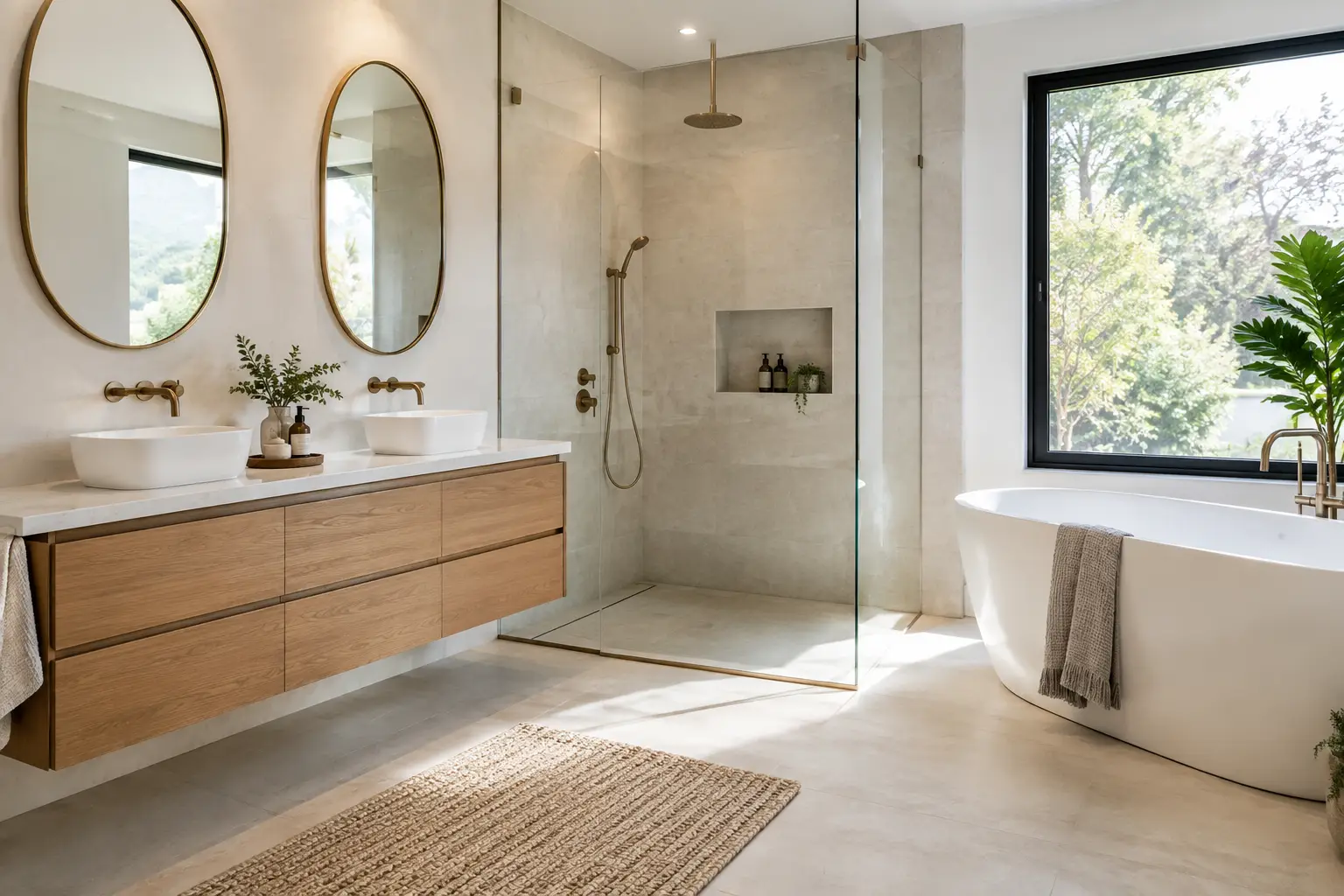
Keep the route from bedroom to basin clear, particularly where space is limited. Wall-hung sanitaryware can make a smaller room feel more open by revealing more floor, while a carefully positioned shower screen protects the room without visually dividing it. A frameless glass panel is often quieter and more refined than a heavily framed enclosure, though a fully enclosed shower may be the better choice where privacy, warmth or splash control is a priority.
Where a bath is desired, consider whether it will genuinely be used. A freestanding bath can create a beautiful focal point in a generous suite, especially against a textured wall or beneath a window. In a modest ensuite, however, a sculptural bath can compromise circulation and leave too little room for comfortable showering or useful storage. A deep, compact bath or a well-proportioned walk-in shower may offer the more satisfying everyday result.
Let the bedroom and bathroom belong together
An ensuite should feel connected to the bedroom without becoming an extension of it. Repeat a timber tone from fitted furniture, pick up a muted colour from upholstery, or use the same metal finish on bedroom handles and bathroom brassware. These smaller connections create a considered scheme.
There is a balance to strike. Bathrooms need surfaces that withstand moisture and are simple to maintain, so avoid forcing bedroom materials into places where they will not perform. Instead, use colour, texture and lighting to establish continuity, while allowing the bathroom to retain its own practical character.
Choose a calm, enduring material palette
Trends can be inspiring, but an ensuite is usually a significant investment and should still feel right in years to come. Natural-looking porcelain, fine-veined stone effects, warm neutrals and softly tactile finishes create a versatile foundation. They also sit comfortably in both contemporary homes and older Cumbrian properties where character matters.
Large-format tiles can make a compact room appear calmer because there are fewer grout lines to interrupt the surface. They need a level substrate and skilled fitting, particularly in a shower area, but the finished effect is clean and generous. Smaller tiles, including mosaics or handmade-look ceramics, bring welcome detail to niches, shower floors and feature walls. Use them selectively so the room remains restful rather than busy.
Warm whites, chalky taupes, soft greens and mineral greys tend to have more staying power than stark contrasts. If you prefer a stronger look, introduce depth through a painted vanity, richly toned wall tile or natural stone rather than committing every surface to one dramatic finish. A dark scheme can be striking, but it needs excellent lighting and enough visual space to avoid feeling enclosed.
Think beyond the tile sample
A tile that looks subtle in a showroom can appear much darker across four walls, while a brass finish may change character under cool lighting. View samples together, in the room where possible, and consider them at different times of day. This is particularly valuable in Lake District homes, where changing natural light is part of daily life.
Also consider practical details at the selection stage. Matt porcelain is generally forgiving underfoot, while highly polished surfaces may show water marks more readily. Natural stone has distinct beauty, but it may need sealing and more considered care. The right choice depends on the look you want and how much maintenance suits your household.
Make lighting work at every hour
A single ceiling light rarely does an ensuite justice. Layered lighting brings both comfort and function, allowing the room to adapt from a bright weekday morning to a quieter evening routine.
Start with good ambient lighting, then add even illumination at the mirror. Vertical lights on either side of the basin tend to flatter the face better than one downlight directly overhead, reducing shadows for shaving, skincare and make-up. An illuminated mirror can be a practical option in a compact room, particularly when it includes demisting, but it should still give enough clear light for daily use.
Consider low-level lighting beneath a vanity or along a recess. It adds a gentle sense of depth and provides a useful night-time guide without flooding the bedroom with harsh light. Dimmers make the scheme more flexible, while bathroom-rated fittings and carefully planned switching ensure it remains safe as well as elegant.
Build in storage before the room is fitted
Luxury is often less about having more objects on show and more about having a place for everything. An uncluttered basin, a clear shower ledge and folded towels within reach all make an ensuite feel more generous.
A vanity unit is usually the hardest-working piece in the room. Drawer storage is particularly effective for everyday toiletries, as contents are easier to see and access than in a deep cupboard. In a narrow room, a reduced-depth vanity can preserve circulation without sacrificing the visual anchor a basin unit provides.
Recessed niches are valuable in shower areas, offering storage without projecting into the space. Plan their height around the bottles you actually use and ensure they are properly waterproofed. A mirrored cabinet can also be worthwhile, especially where there is no separate linen cupboard, but choose a proportion that suits the basin below rather than letting it dominate the wall.
Make the shower feel considered, not simply fitted
A well-designed shower can give an ensuite its hotel-like quality, but comfort comes from the details. A generous tray or level-access wet-room area feels more spacious and is easier to step into. It does, however, require precise falls, waterproofing and drainage planning. This is not an area to compromise on installation.
A fixed overhead shower creates an indulgent experience, while a separate handset makes cleaning and rinsing easier. If water pressure is uncertain, establish what the property can support before choosing fittings. In older rural homes, practical plumbing assessment can prevent disappointment later.
Include enough space for towels and a robe near the shower, rather than treating these as an afterthought. A heated towel rail should be sized for the room and positioned where it is useful, not merely where there is a spare piece of wall. Underfloor heating is equally appealing in an ensuite because it frees the walls from bulky radiators and keeps tiled floors pleasantly warm, though it works best when specified early in the project.
Add personality through the finishing touches
The final layer is where an ensuite becomes personal. A ribbed glass screen, a fluted vanity front, a beautifully shaped basin or a hand-finished tile can introduce character without overwhelming the room. Keep these moments focused. One or two expressive elements are often more effective than competing feature walls, patterned floors and statement fittings all at once.
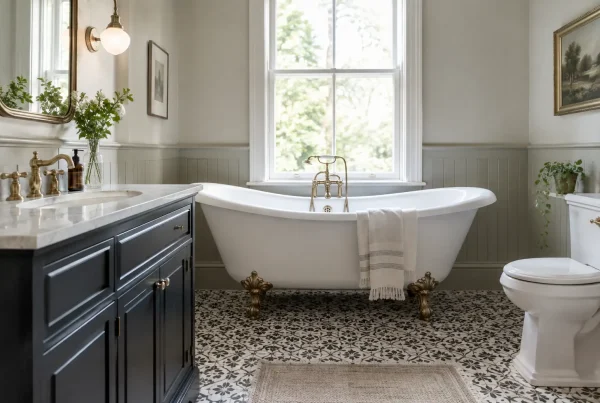
Brassware deserves the same consideration as the larger surfaces. Brushed nickel is understated and versatile, while aged brass adds warmth and works particularly well with timber, stone and softer palettes. Matt black can look crisp in a contemporary scheme, but water marks may be more visible and it benefits from a disciplined, cohesive design around it.
Ventilation is another finishing detail that should never be overlooked. A quiet, effective extractor protects finishes, helps mirrors clear and keeps the room feeling fresh. It may not be the glamorous part of the design, but it protects the investment in every other part of it.
A thoughtfully designed ensuite should make daily routines feel simpler, not more complicated. Begin with how you live, choose materials that will continue to please you, and allow enough time for careful planning and fitting. For homeowners seeking a fully considered result, a design appointment with Lakeland Bespoke Interiors offers a reassuring place to turn ideas into a bathroom made for the way your home is lived in.