
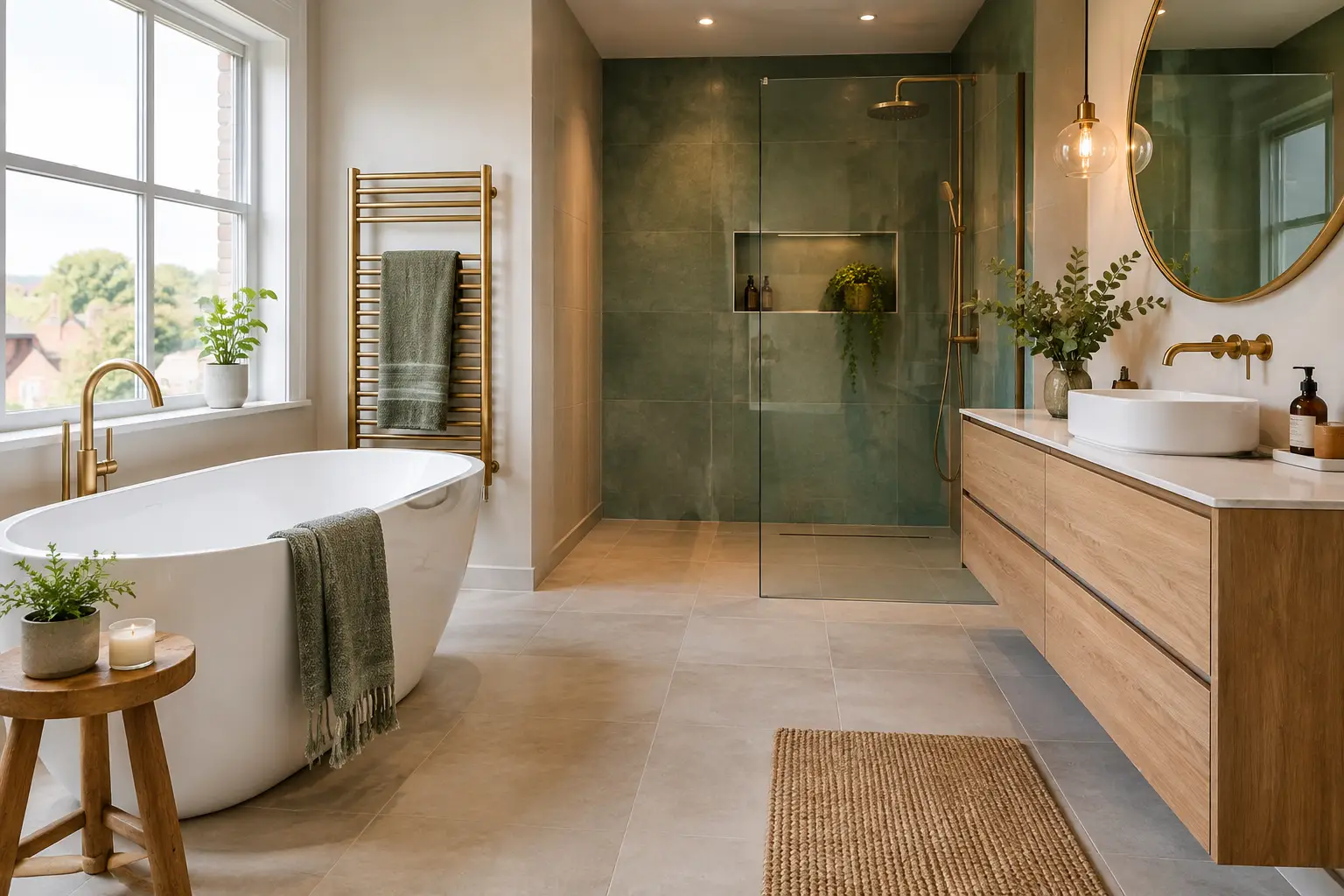
A bathroom should feel just as considered at six o’clock on a winter morning as it does when guests arrive for a weekend in the Lakes. The most compelling bathroom trends 2026 move away from showpiece features chosen for a photograph and towards rooms that bring daily comfort, visual calm and long-term quality together.
For homeowners planning a full refurbishment, the opportunity is not simply to choose this season’s tiles or brassware. It is to create a space that suits the character of the property, the way the household lives and the level of finish expected from a lasting investment. Here are the directions shaping beautifully designed bathrooms in the year ahead.
Bathroom trends 2026: warmth replaces clinical minimalism
Cool grey schemes and highly polished surfaces have had a long run. In 2026, bathrooms are becoming warmer, more tactile and more inviting. This does not mean abandoning a clean, contemporary look. It means using materials and colours that soften it.
Think limestone-effect porcelain, softly veined stone, warm white finishes, clay-toned tiles and timber cabinetry with a natural grain. Colours are grounded rather than loud: mushroom, oat, tobacco, muted olive, soft terracotta and deep mineral blue all work well when balanced with quieter neutrals.
The key is restraint. A bathroom finished entirely in strong colour can feel dated quickly, while a room with a warm neutral backdrop allows personality to come through in a vanity unit, painted wall, artwork or carefully selected accessories. In a period home, these tones can sit naturally alongside original features. In a newer property, they add the depth that standard white fittings can sometimes lack.
Spa-like, but designed for real life
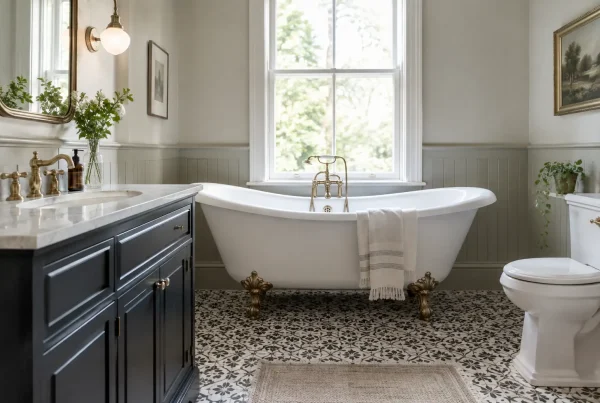
The desire for a more restorative bathroom continues, but the best schemes will feel calm without becoming impractical. A freestanding bath remains a beautiful focal point where space allows, particularly in a principal bathroom with generous proportions. It is not, however, automatically the right choice for every room.
A large walk-in shower may offer more value to a busy household, and a fitted bath can be the more sensible option for family bathing or compact layouts. The luxury lies in the experience: a well-proportioned shower area, quality controls, a comfortable bath, plentiful storage and lighting that changes with the time of day.
Wet-room detailing is becoming more refined too. Level-access shower areas, carefully formed falls and minimal glass screens can make a room feel spacious and composed. This approach needs expert planning and installation, especially in older properties where floor construction and waterproofing require close attention. When it is specified properly, it is both elegant and practical.
Textured surfaces add quiet character
One of the strongest bathroom trends 2026 is the use of texture to create interest without visual clutter. Fluted glass, ribbed vanity fronts, handmade-look wall tiles and brushed metal finishes all bring a sense of craftsmanship to the room.
Rather than covering every wall in a feature tile, consider where texture will have the greatest effect. It might sit behind the basin, inside a shower niche or along one wall of a cloakroom. A softly textured tile paired with a smooth large-format porcelain creates contrast while keeping cleaning straightforward.
Natural stone remains desirable, but it should be chosen with care. Some stones need more maintenance than porcelain alternatives, and not every surface is suited to the splash zones around a shower or basin. High-quality porcelain now offers convincing stone and marble effects with excellent durability, making it a sensible choice for households that want a luxurious look with less upkeep.
Furniture-led bathrooms feel more personal
Bathroom furniture is moving further away from uniform, wall-to-wall white gloss. In its place are vanity units and storage pieces that feel closer to considered furniture found elsewhere in the home.
Painted cabinetry, darker timber, curved corners and elegant framed details are all gaining ground. A generous double vanity can transform the morning routine in a shared principal bathroom, while a slimline single basin unit may be the better solution in an ensuite. The right answer depends on the room’s dimensions, plumbing positions and who will use it.
Storage should be planned from the start rather than added afterwards. Deep drawers, mirrored cabinets and discreet tall units help keep surfaces clear, which is essential to the calm, ordered feel many homeowners want. Open shelving can look attractive, but it works best for a small edit of towels or decorative pieces rather than everyday toiletries.
Lighting becomes part of the design, not an afterthought
A single ceiling light rarely does a thoughtfully designed bathroom justice. Layered lighting is now a central part of the brief, helping the room work for early starts, evening baths and everything between.
Practical task lighting around the mirror is essential for shaving, skincare and make-up. Recessed ceiling lights provide even general illumination, while concealed LED strips under a vanity or within a niche introduce a softer glow. Dimmable controls allow the atmosphere to shift from bright and functional to relaxed and low-lit.
Good lighting is particularly valuable in Cumbria, the Lake District and other areas where winter daylight can feel limited. It brings warmth to natural finishes and makes a bathroom feel welcoming at any hour. Every fitting must be suitable for its location within the room, so lighting should always be planned alongside the layout and electrical work rather than selected at the end.
Statement metal finishes, used with confidence
Chrome will always have a place because it is classic, versatile and easy to coordinate. Yet brushed brass, warm bronze, aged nickel and soft black are increasingly chosen to give a bathroom greater identity.
Brushed finishes are often more forgiving than highly polished ones, as they show fewer water marks and fingerprints. Aged brass and bronze can be especially effective with timber, natural stone and earthy tiles, giving a scheme depth without appearing overly traditional.
Consistency matters. Ideally, taps, shower controls, accessories and cabinet handles should sit in the same finish family. There can be exceptions – a black-framed shower screen beside brushed brass brassware can work in the right contemporary setting – but they should be intentional. Too many competing metals can make an otherwise elegant bathroom feel unsettled.
Curves soften the room
Curved mirrors, arched shower screens, rounded basins and gently shaped vanity units are helping bathrooms feel less rigid. This is a subtle trend with real staying power because it is not dependent on novelty. Curves simply bring softness to a room dominated by hard, practical surfaces.
A large round or pill-shaped mirror above a vanity is an easy starting point. In a more ambitious renovation, a curved feature wall or an arched niche can add architectural interest. These details need to be carefully proportioned, particularly in smaller bathrooms, where every line has more visual impact.
Bespoke planning makes compact spaces work harder
Not every bathroom needs to be large to feel luxurious. In fact, ensuites, cloakrooms and awkward attic rooms often benefit most from tailored planning. A made-to-measure vanity, recessed storage and the right shower enclosure can turn an overlooked space into one of the most useful rooms in the house.
Wall-hung furniture helps reveal more floor area, while large-format tiles with minimal grout lines can make a compact room feel calmer and more expansive. A clear glass shower screen usually maintains a better sense of openness than a heavily framed enclosure, although privacy requirements and cleaning preferences should also be considered.
The most successful layouts begin with how the room will be used. Consider where towels will sit, whether there is enough landing space around the basin, how easily the shower controls can be reached and whether the door conflicts with storage or fittings. These decisions have a greater effect on everyday enjoyment than any individual trend.
Choose longevity over a showroom moment
A well-designed bathroom should still feel right long after the latest colour or finish has changed. That does not mean selecting the safest possible scheme. It means building a timeless foundation and introducing character in ways that can evolve.
Invest in the elements that are difficult to change: a sensible layout, excellent waterproofing, quality sanitaryware, durable furniture and carefully installed tiles. Add personality through paint, mirrors, lighting, textiles and accents. This balance creates a room with presence, while protecting the long-term value of the investment.
At Lakeland Bespoke Interiors, the starting point is always the home and the people living in it. Bring your ideas, measurements and inspiration to a design appointment, then allow the room to take shape around the way you want to live – with care, clarity and a finish that will continue to feel special every day.