A cabinet door can look flawless in a showroom and feel entirely different after six months of family breakfasts, wet coats, cooking steam and everyday use. The best kitchen cabinet finishes balance the character you want to create with the way you genuinely live. A soft painted finish may suit a period home beautifully; a sleek matt surface may be the better choice for a busy contemporary space. The right answer is rarely one-size-fits-all.
For a kitchen designed to last, the finish deserves the same consideration as the layout, worktop and appliances. It influences how light moves through the room, how often you notice fingerprints, how easily marks can be repaired and whether the cabinetry still feels right as your home evolves.
What makes a kitchen cabinet finish right for your home?
Start with the room rather than a sample door. Natural light, ceiling height, the age of the property and the connection to adjoining living spaces all shape which finish will feel at home. In a Lake District cottage, for example, a painted timber kitchen can bring softness and depth without looking overly formal. In a light-filled extension, a refined matt lacquer or wood veneer may give the room a calmer, more architectural quality.
Practicality matters just as much. Young families and keen cooks often need surfaces that tolerate regular cleaning and the occasional knock. For others, the pleasure of a finish that gains character over time may be worth a little more care. A considered kitchen design accounts for both.
It is also worth looking at finishes alongside handles, lighting and worktops. A dark painted cabinet can feel elegant and grounded beside pale stone, yet become heavy in a room with limited daylight. Likewise, a handleless door in a satin finish can look beautifully understated, but may need a warmer timber element elsewhere to prevent the scheme feeling too cool.
The best kitchen cabinet finishes to consider
Painted timber for depth and individuality
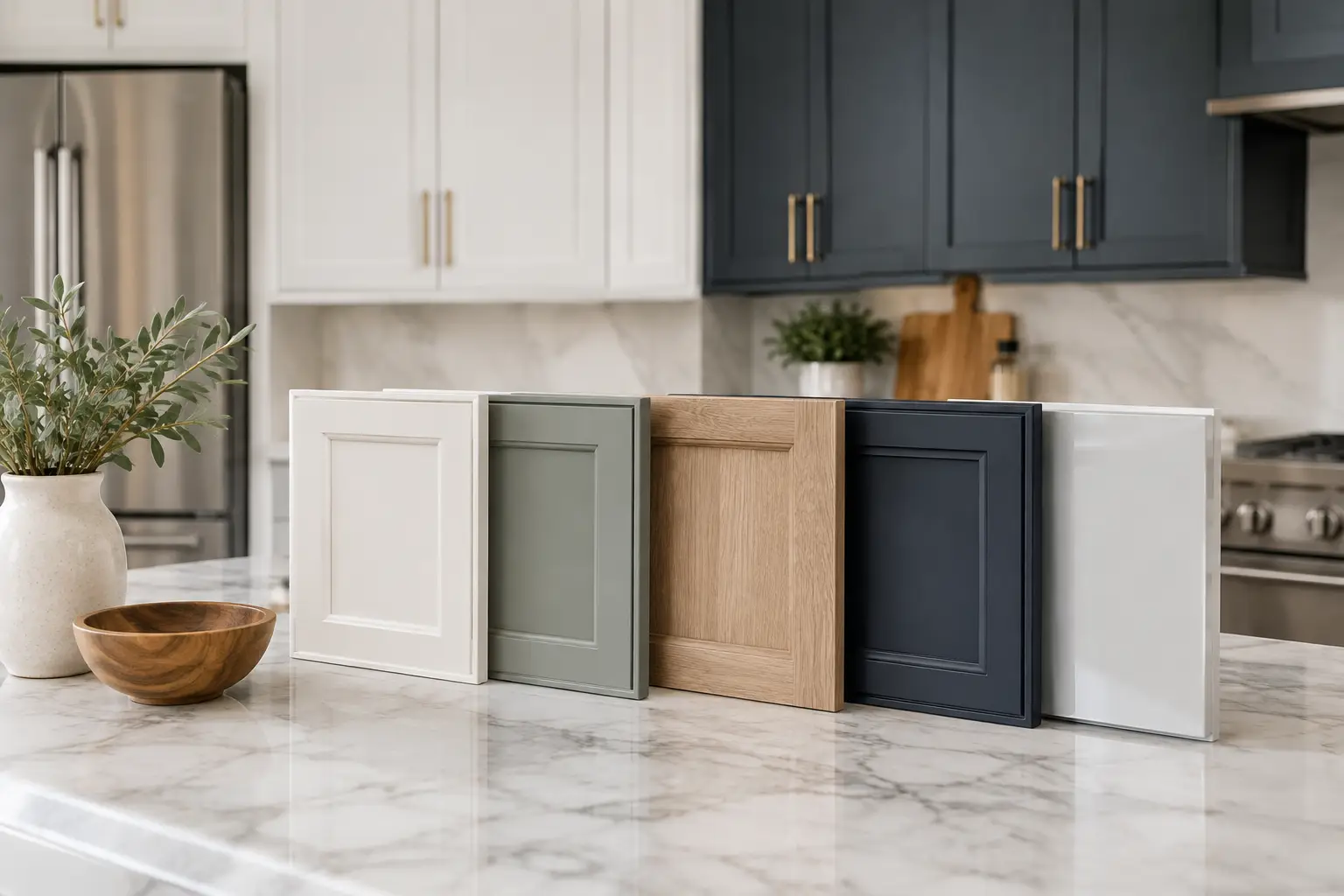
Painted timber remains a favourite for bespoke kitchens because it offers an enormous range of colour and a tangible sense of craftsmanship. It is particularly suited to Shaker, in-frame and classic cabinetry, although it can be given a crisp, contemporary edge with simple door detailing and modern hardware.
The principal advantage is flexibility. Colours can be selected to complement the architecture of your home, from warm whites and soft greys to rich greens, blues and charcoal tones. A painted finish also allows a kitchen to feel personal rather than standardised. Over time, if you wish to refresh the room, repainting can offer a new direction without replacing well-made cabinetry.
There are trade-offs. Timber naturally moves very slightly with changes in temperature and humidity, so fine joints or subtle texture can become more apparent over time. This is not a flaw – it is part of the material’s character – but it is worth understanding before choosing it. Painted cabinetry also benefits from gentle cleaning and prompt attention to chips, especially around high-use areas such as bins, islands and door edges.
Matt lacquer for modern calm
Matt lacquered doors have a smooth, even appearance that works particularly well in contemporary kitchens. Their low-sheen surface absorbs light rather than bouncing it around the room, giving a quiet, composed finish. This makes matt lacquer an excellent option for open-plan spaces where the kitchen needs to sit comfortably alongside furniture and architectural details.
Deep olive, mushroom, graphite and warm neutral tones often look especially sophisticated in matt finishes. They create colour without excessive visual noise and work well with brushed metal, natural stone and timber accents.
Not all matt surfaces perform in the same way. Some show fingerprints more readily than others, particularly in darker colours, while high-quality anti-fingerprint options can make daily life considerably easier. Ask to see generous samples in your own lighting and consider how the finish feels as well as how it looks. A kitchen is touched every day.
Satin and subtle sheen finishes
Satin finishes sit between matt and gloss. They have a gentle reflectivity that can lift a darker room without the mirror-like quality of high gloss. For homeowners who want a clean contemporary look with a little more light movement, satin is often a considered middle ground.
This finish can be particularly effective on tall cabinetry, where a faint sheen adds elegance without drawing attention to every surface. It also pairs comfortably with painted doors or veneer, allowing different zones of a larger kitchen to feel connected rather than uniform.
Satin is generally forgiving, though it will still show smudges in strong side light. It is a worthwhile choice when you would like a polished finish but prefer something softer than gloss.
Natural wood veneer for warmth and texture
Wood veneer brings real timber grain to cabinetry in a controlled, refined way. It offers warmth, variation and tactile interest, making it ideal for kitchens that need to feel welcoming as well as luxurious. Oak, walnut and smoked timber finishes can be used across an entire scheme or introduced selectively on an island, dresser or bank of tall units.
The grain direction matters. Vertical grain can make tall cabinetry feel more streamlined, while horizontal grain can emphasise width and lend a low, relaxed profile to an island. These details are subtle, but they have a meaningful effect on the finished room.
Veneer is not simply a rustic choice. In fact, it is often most striking when paired with clean lines, discreet handles and understated stone. The consideration is consistency: natural timber has variation, so samples should be viewed as a guide rather than an exact promise of every grain pattern. For many homeowners, that individuality is precisely the appeal.
High-gloss lacquer for light and drama
High-gloss cabinetry creates a highly reflective surface that can make compact or naturally dark kitchens appear brighter. It suits sharp, minimalist schemes and can bring a sense of drama to a modern flat or contemporary extension.
However, gloss is not automatically the best choice for every bright kitchen. Its reflections can compete with busy views, patterned worktops or plentiful pendant lighting. It can also reveal fingerprints and fine surface marks more readily, particularly in darker shades. In a carefully edited design, though, gloss can look striking and purposeful.
Laminate finishes for everyday resilience
Modern laminates have moved well beyond the flat, artificial surfaces many homeowners remember. Quality options can convincingly echo timber, stone, linen and painted colours while offering excellent durability and straightforward maintenance. They are particularly valuable where resilience, consistency and budget control are priorities.
A laminate finish may be ideal for a utility room, a hardworking family kitchen or a project where funds are being invested in a statement worktop, appliances or a larger island. The key is to select a finish with convincing texture and edge detailing. Well-chosen laminate can look exceptionally smart, but lower-quality versions can lack the depth and refinement expected in a premium home.
Choosing colour, sheen and texture together
The finish is only one part of the decision. Colour changes its appearance according to sheen, texture and light. A navy blue in a painted timber finish may feel heritage-led and inviting; the same shade in a smooth matt lacquer can feel graphic and contemporary.
For smaller kitchens, lighter finishes are often helpful, but white is not the only answer. Warm putty, pale sage, mushroom and soft taupe can keep a room open while introducing more character. In generous rooms, darker cabinetry can define the kitchen and make pale worktops, artwork and lighting stand out.
Two-tone schemes are useful where you want balance. A darker island with lighter perimeter units can anchor an open-plan room, while timber tall units alongside painted base cabinets can introduce warmth without overwhelming the space. The most successful combinations usually limit the palette rather than adding contrast everywhere.
Care and longevity: the questions worth asking
Before finalising a finish, ask how it will be cleaned, whether it can be repaired, how it responds to heat and moisture, and what warranty or aftercare is available. A beautiful finish should not become a source of anxiety.
Avoid abrasive cleaners, rough scouring pads and excessive water on any cabinet surface. Use a soft cloth with a mild cleaning solution, then dry the surface rather than allowing moisture to sit around joints and handles. Timber and painted finishes deserve particular care near sinks, dishwashers and boiling-water taps.
It is sensible to think about the least glamorous areas too. Cupboard doors beside the bin, the panels around an island seating area and tall units close to a family entrance tend to receive the most contact. Selecting a more forgiving colour or finish in these zones can make a meaningful difference to daily upkeep.
A finish should feel as good as it looks
The strongest kitchen schemes are not built around a trend alone. They are shaped around the home’s architecture, the people using the room and the details that make everyday life easier. Seeing full-size samples, comparing them in changing light and discussing the practicalities with an experienced designer can prevent costly compromises later.
At Lakeland Bespoke Interiors, a showroom appointment offers the opportunity to see how finishes, colours and materials work together before your kitchen takes shape. Choose the finish that suits your home now, but also one you will be pleased to live with for years to come.