
The finish on your cabinetry does more than set the colour scheme. It affects how the room feels at 8am on a busy weekday, how it sits alongside original beams or a contemporary extension, and how gracefully it will age over the years. When considering painted versus wood kitchen cabinets, the right answer is rarely simply ‘modern’ or ‘traditional’. It is about the character of your home, the light in the room and how you want the space to work for your family.
Both can be beautifully made, practical and enduring. The distinction lies in the visual effect, the level of maintenance you are comfortable with and the freedom you want to make changes in future.
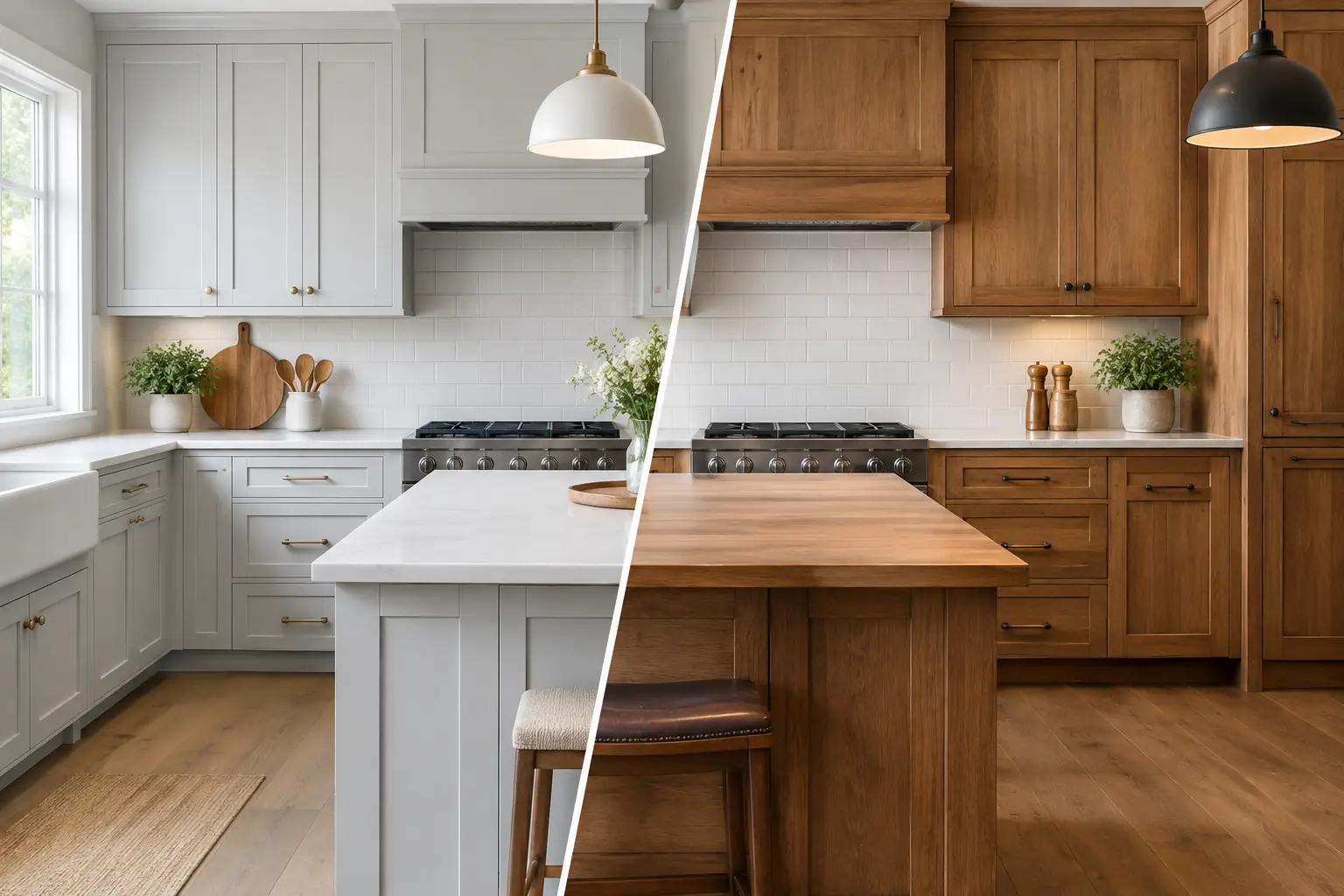
Painted versus wood kitchen cabinets: the essential difference
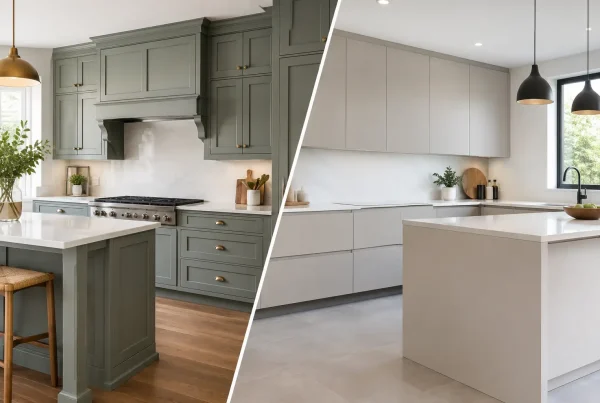
Painted cabinetry is typically made from a stable engineered timber or hardwood frame, then finished in a carefully chosen paint colour. It gives a kitchen a tailored, furniture-like quality and allows the design to respond precisely to the property. A soft sage can settle naturally into a country home, while a deep navy, warm stone or considered neutral can give a contemporary scheme greater depth.
Wood cabinetry celebrates the natural grain of timber. The finish may be pale and understated, richly stained or gently oiled, but the material remains visible. No two doors will be identical, and that variation is part of its appeal. It brings warmth and texture that can be particularly striking in homes with stone floors, generous glazing or a strong connection to the surrounding landscape.
The choice is not necessarily between colour and character. Painted kitchens can have considerable depth through door detailing, hardware and tonal layering. Wood kitchens can feel clean and contemporary when paired with simple door styles and restrained finishes. The key is choosing a finish that supports the architecture rather than competing with it.
Why homeowners choose painted cabinets
The greatest advantage of painted cabinetry is flexibility. A bespoke painted kitchen can be matched to a very specific shade, whether you are complementing a favourite piece of furniture, the tones in a worktop or the changing light of a north-facing room. This makes it especially effective when the kitchen needs to feel integrated with the rest of the house rather than fitted as a separate, standardised space.
Colour also gives you the opportunity to shape the mood. Lighter shades can make a compact kitchen feel calmer and more open, while darker cabinetry creates a grounded, elegant focal point in a larger room. Two-tone schemes are useful where an island, pantry or dresser deserves its own identity without disrupting the overall harmony.
Painted finishes suit both classic framed doors and simpler contemporary designs. In a period property, an off-white or muted green may feel quietly established. In a newer home, warm greys, clay tones and inky blues can bring a more architectural quality. A good designer will consider undertones carefully, because a grey that appears soft in a showroom can look blue, green or cold in a room with different natural light.
There is also a practical long-term benefit. If you eventually want to refresh the look, painted cabinetry can often be repainted professionally. That does not mean it is maintenance-free, but it can make a well-built kitchen feel adaptable rather than fixed in time.
The care to expect from a painted finish
Painted surfaces can show chips or scuffs more readily than textured timber, particularly around handles, bin units and high-traffic corners. This is not a reason to avoid them, but it is worth being realistic in a home with energetic children, dogs or a particularly busy cook.
Quality preparation, durable paint systems and careful installation make a meaningful difference. Day to day, a soft cloth, warm water and a mild cleaner are usually enough. Avoid abrasive products and deal with splashes promptly, especially around the sink, dishwasher and hob. Small marks can often be touched in, while more significant wear can be addressed as part of a professional refresh.
The lasting appeal of wood kitchen cabinets
Wood offers a tactility that paint cannot replicate. Oak, walnut and other timbers bring natural movement to the room, creating a finish that feels substantial and settled. In a rural or period home, wood can echo existing joinery and architectural details without becoming overly rustic. In a contemporary setting, it can soften clean lines and prevent the room from feeling stark.
The grain also makes wood remarkably forgiving. Minor everyday marks tend to blend into the natural variation more easily than they might on a smooth painted door. An oiled timber finish can often be maintained locally, allowing the surface to develop a gentle patina rather than looking worn out.
Wood is not confined to one look. Pale oak works well in light, pared-back kitchens, especially alongside natural stone and brushed metal. Mid-tone timbers bring quiet warmth, while walnut introduces a richer, more formal note. The species, cut of timber and finish all matter. A timber sample should be viewed in your own room where possible, not chosen under showroom lighting alone.
Where wood requires care
Natural timber responds to its environment. Changes in humidity and temperature can cause subtle movement over time, which is normal for a living material. Well-made cabinetry accounts for this, but consistent ventilation and sensible care help protect the finish.
Wood should be cleaned gently and dried rather than left wet. Oiled finishes may need periodic re-oiling, particularly in hardworking areas, while lacquered finishes generally require less routine maintenance but can be harder to repair invisibly if damaged. Neither approach is inherently better. It comes down to whether you value the ability to maintain the surface yourself or prefer a more sealed, low-intervention finish.
Consider the room before choosing the finish
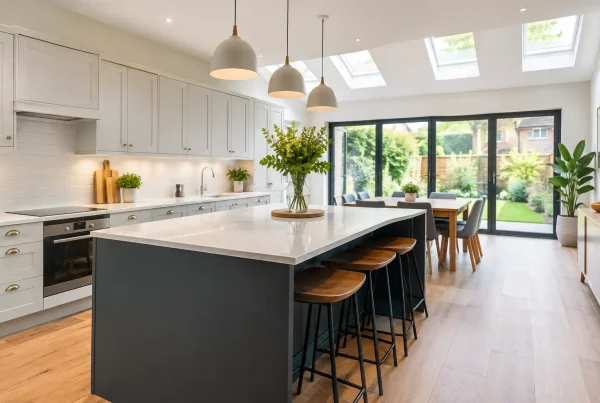
A kitchen with limited daylight often benefits from painted cabinetry in a lighter or mid-tone shade, although pale timber can be equally effective when balanced with reflective worktops and considered lighting. In a large open-plan room, wood can stop the scheme from feeling too expansive or impersonal. Painted cabinetry can create definition, particularly when an island is given a deeper contrasting colour.
Existing features should guide the decision too. Original stone walls, beams and timber floors do not automatically demand a wood kitchen. In fact, painted cabinetry can offer welcome contrast and keep historic details from becoming visually heavy. Conversely, a sleek extension does not have to be all painted surfaces and polished finishes. A timber island or tall bank of wood cabinetry can bring warmth and balance.
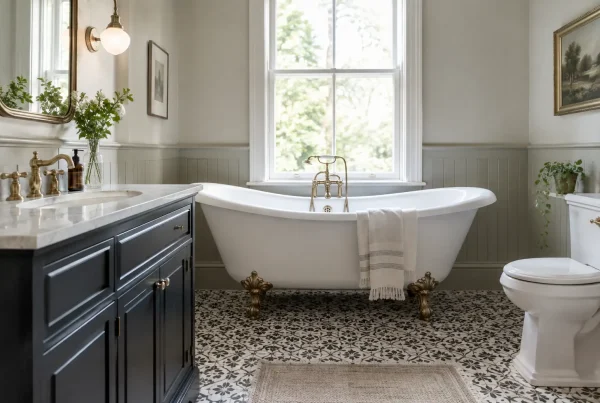
Think beyond the doors. Worktops, splashbacks, flooring, handles and lighting all influence how painted or wood cabinetry will read. A painted kitchen with aged brass handles and a veined stone worktop has a very different presence from the same cabinetry with chrome and a crisp quartz surface. Similarly, wood paired with dark stone can feel dramatic, while wood with pale ceramic and linen-toned walls feels relaxed and light.
Is a mixed finish the best of both?
For many homes, the most convincing answer is not one finish throughout. Combining painted perimeter units with a timber island, dresser or breakfast area gives the room depth without making it feel busy. The painted elements can tie into the wider interior palette, while the timber becomes a tactile focal point.
This approach is particularly useful in open-plan spaces where the kitchen needs to relate to living and dining areas. A wood feature can make the island feel more like furniture, while quieter painted cabinetry allows appliances and storage to sit back. The finishes need a clear relationship, however. Similar undertones and a disciplined palette are what make a mixed scheme feel intentional.
Make the decision for the long term
Choose painted cabinetry if colour expression, future refresh potential and a tailored furniture finish matter most to you. Choose wood if natural texture, visible material quality and a finish that acquires character appeal more. If your preference changes depending on which part of the room you picture, a carefully balanced combination may be the better route.
The most successful kitchens are not chosen from a single door sample. They are designed around the way the room is used, the daylight it receives and the details that make a home feel personal. At Lakeland Bespoke Interiors, a considered showroom appointment allows those decisions to be made with samples, proportions and practical use in mind, so the final finish feels right long after installation day.