
A kitchen can feel beautifully finished on installation day yet quickly date if every choice follows a passing fashion. Classic contemporary kitchen design takes a more considered route. It combines the reassuring proportions and detail of traditional cabinetry with the clean lines, practical layouts and refined materials that suit modern family life.
For homes across Cumbria, the Lake District and beyond, that balance is especially valuable. A kitchen may sit within a period farmhouse, a stone-built village home or a newer extension with wide views and generous natural light. The aim is not to make every setting look the same. It is to create a room that belongs to the house, works hard every day and still feels right years from now.
What defines classic contemporary kitchen design?
Classic contemporary style is not simply a traditional kitchen with modern appliances, nor a minimal kitchen softened by a few decorative handles. Its character comes from deliberate contrast: familiar forms are edited, practical elements are integrated and finishes are selected for depth rather than novelty.
Shaker-style doors are often a natural starting point, but their success depends on proportion. A finer frame, a simple recessed panel and a calm painted finish can look tailored rather than overly rustic. Alternatively, a slim framed door or subtly detailed in-frame cabinet can introduce heritage without making the room feel formal.
The contemporary element is usually found in the restraint around those details. Cabinet runs are clean and uninterrupted. Tall storage is carefully aligned. Appliances are integrated where appropriate, and the worktop is allowed to create a clear horizontal line through the room. Rather than competing for attention, each feature has a purpose.
This is why the style has such staying power. It feels considered rather than themed. A well-designed room can acknowledge the architecture of an older property while providing the storage, lighting and cooking performance expected of a new kitchen.
Begin with the architecture, not a trend
The strongest kitchens respond to their surroundings. Before selecting a door style or paint colour, look closely at the room itself: ceiling height, window positions, original beams, flooring, sightlines and how the kitchen connects to adjacent spaces. These details should inform the design rather than become obstacles to work around.
In a period property, existing features may call for softer cabinetry proportions, warm timber accents and a palette that sits comfortably beside aged stone or plaster. That does not mean recreating a country kitchen from another era. A large, uncluttered island, discreet integrated refrigeration and contemporary pendant lighting can provide contrast while preserving the building’s character.
In a newer home or extension, classic elements help prevent a crisp architectural space from feeling stark. Fluted glass, painted timber cabinetry, aged brass or bronze hardware and a richly veined natural stone can add warmth. The key is not to add every detail at once. One or two tactile, enduring materials usually achieve more than a room filled with statement finishes.
Keep the palette composed
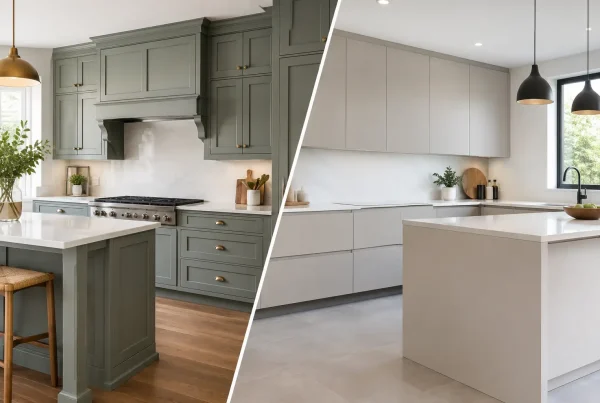
Neutral cabinetry remains popular for good reason, but neutral need not mean bland. Soft putty, mushroom, warm white, olive-grey and deep blue-green tones tend to work well because they change gently with the light. They also offer a more forgiving backdrop for everyday life than a very pale, high-contrast scheme.
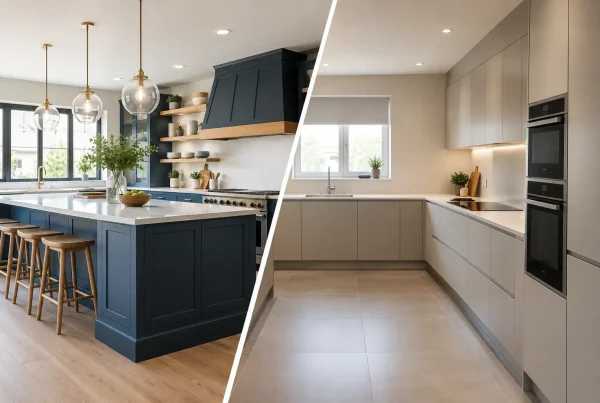
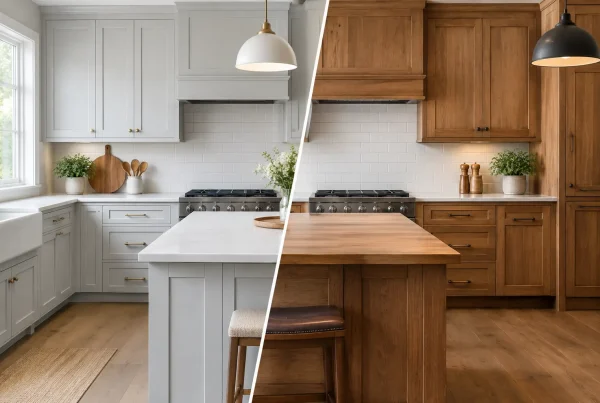
For a bolder look, consider grounding the room with a darker island or tall cabinet bank while keeping perimeter cabinetry lighter. This creates visual structure without dividing the space. Timber can be used to introduce warmth, particularly on an island, open shelf or internal cabinet detail, but it is most effective when it feels intentional rather than scattered throughout the room.
Choose materials for use as well as appearance
Luxury is felt as much as it is seen. A worktop may look striking in a showroom, but its suitability depends on how the household cooks, entertains and maintains the space. Natural stone has depth and individuality, developing character over time, though some varieties need more care around acidic spills and staining. Quartz offers consistency and practical durability, while porcelain can provide a crisp, architectural finish with excellent heat and scratch resistance.
There is no single best surface. A busy family kitchen may favour a forgiving, low-maintenance material, while homeowners who enjoy the natural variation and patina of stone may happily accept the care it requires. The right decision is an informed one, based on real habits rather than an idealised image of the room.
Cabinet hardware deserves similar consideration. Knobs and pulls are small elements, yet they are touched every day and strongly influence the overall feel. Antique brass can bring gentle warmth to painted cabinetry. Polished nickel feels light and timeless. Dark bronze gives definition, especially against pale doors. Avoid choosing hardware as an afterthought: its scale, finish and placement should be considered alongside the cabinetry from the start.
Let the worktop do some visual work
A thoughtfully detailed worktop can make a classic contemporary kitchen feel particularly resolved. A simple square edge is clean and modern; a softened profile may better suit a traditional setting. Taking the same material up as a splashback creates a quiet, luxurious continuity, especially behind a range or hob.
Where a heavily patterned stone is chosen, calmer cabinetry and simple lighting prevent the scheme from becoming busy. Conversely, a restrained worktop can support more interest in the joinery, tiled splashback or metalwork. Good design is often about deciding where the eye should rest and where it should pause.
Plan a layout that supports everyday life
A beautiful kitchen will not feel luxurious if it is awkward to use. Layout should begin with the routines that happen most often: making breakfast, unpacking shopping, preparing supper, serving guests and clearing away. Storage, appliances and worktop space need to support those movements with as little friction as possible.
An island is valuable when it provides genuine working space, storage or sociable seating. In a narrow room, however, forcing one into the plan can compromise circulation and leave the kitchen feeling crowded. A well-proportioned peninsula, a generous dining table or a clear central aisle may be the more elegant answer.
Tall cabinetry can house refrigeration, ovens, larders and everyday storage in one composed run, keeping the main cooking zone calm. A dedicated pantry, whether walk-in or built into cabinetry, is particularly useful for households that like an uncluttered worktop. Inside, drawers, pull-outs and adjustable shelving make ingredients visible and accessible rather than lost at the back of a cupboard.
Consider the less glamorous details early: bins near the preparation area, charging space for devices, a place for post and keys, and sufficient drawers for pans and crockery. These decisions make a kitchen easier to live with, which is ultimately what gives it lasting value.
Layer lighting rather than relying on one fitting
Lighting is where many otherwise strong schemes lose their warmth. Ceiling spotlights alone can make a kitchen feel flat, while decorative pendants alone rarely provide enough task light. The most successful rooms layer different sources, allowing the atmosphere to change from morning preparation to evening entertaining.
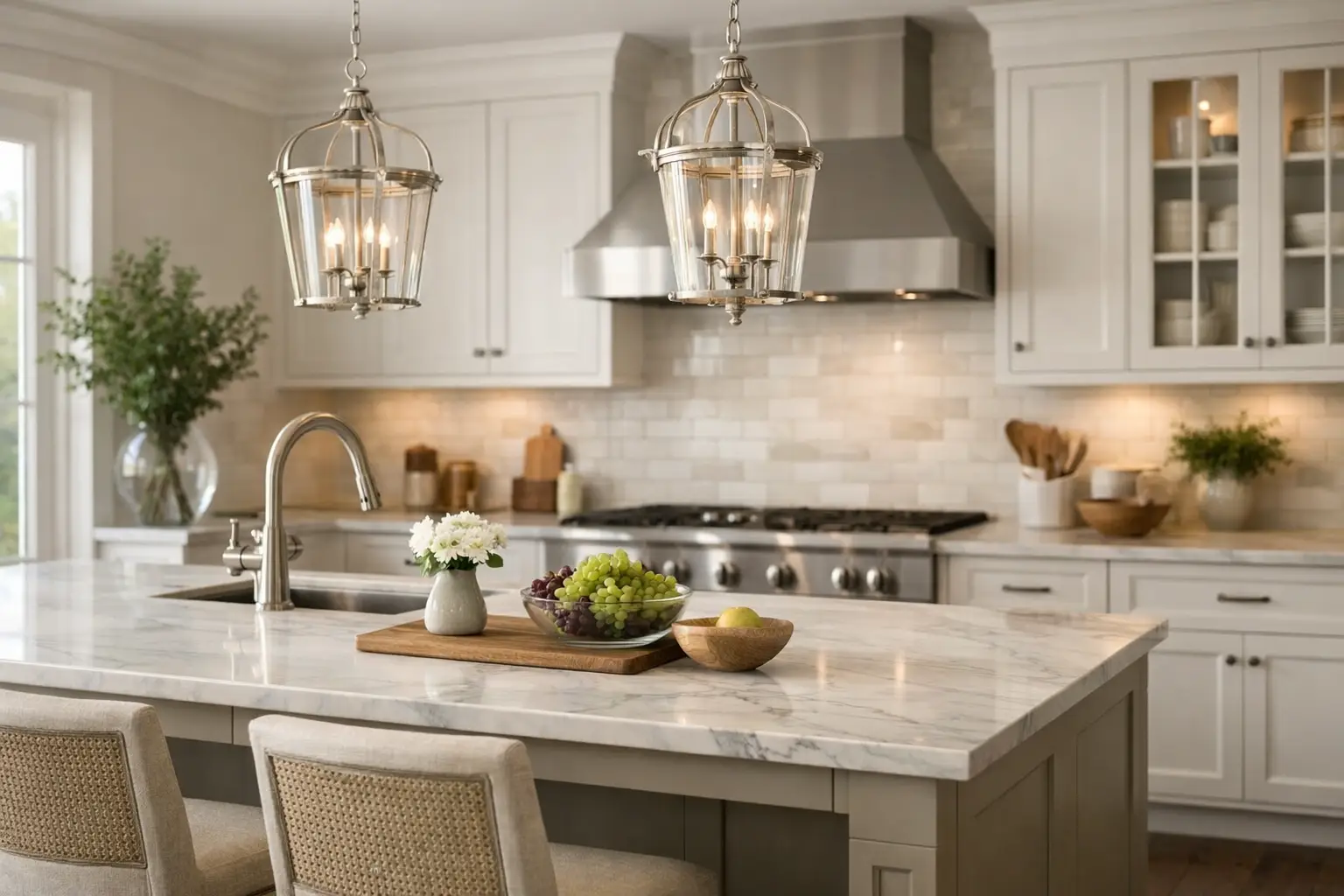
Recessed lighting can provide practical coverage, especially around work areas. Under-cabinet lighting gives clear illumination exactly where it is needed and brings a soft glow to the worktop after dark. Pendants above an island or dining table add personality and help define the social centre of the room. Interior cabinet lighting, used selectively behind fluted or glazed doors, can introduce a quieter sense of detail.
Controls matter too. Dimmers allow a bright, functional kitchen to become a relaxed dining space without changing a single fitting. Choosing a warm colour temperature helps painted finishes, timber and stone retain their depth, particularly during darker winter afternoons.
Detail with restraint
Classic contemporary kitchens benefit from editing. Open shelving can be attractive for ceramics and cookbooks, but too much quickly creates visual noise and demands constant styling. Glazed cabinets can lighten a bank of joinery, but a limited number will look more sophisticated than glazing every door.
The same principle applies to decorative features. A single elegant chimney breast, a beautifully proportioned cornice or a distinctive tap can provide character. When every surface makes a statement, the room loses the calm that makes it feel luxurious.
A tailored design appointment is the opportunity to test these choices together: door profile against worktop, hardware against paint, layout against the realities of the room. Lakeland Bespoke Interiors approaches that process with the care needed to turn individual preferences into a kitchen that feels coherent from every angle.
The best classic contemporary kitchen is not one that tries to impress at first glance alone. It is the one that still feels composed after breakfast dishes, school bags, dinner with friends and many years of daily use – a room made for the life of the home, not just the photograph.