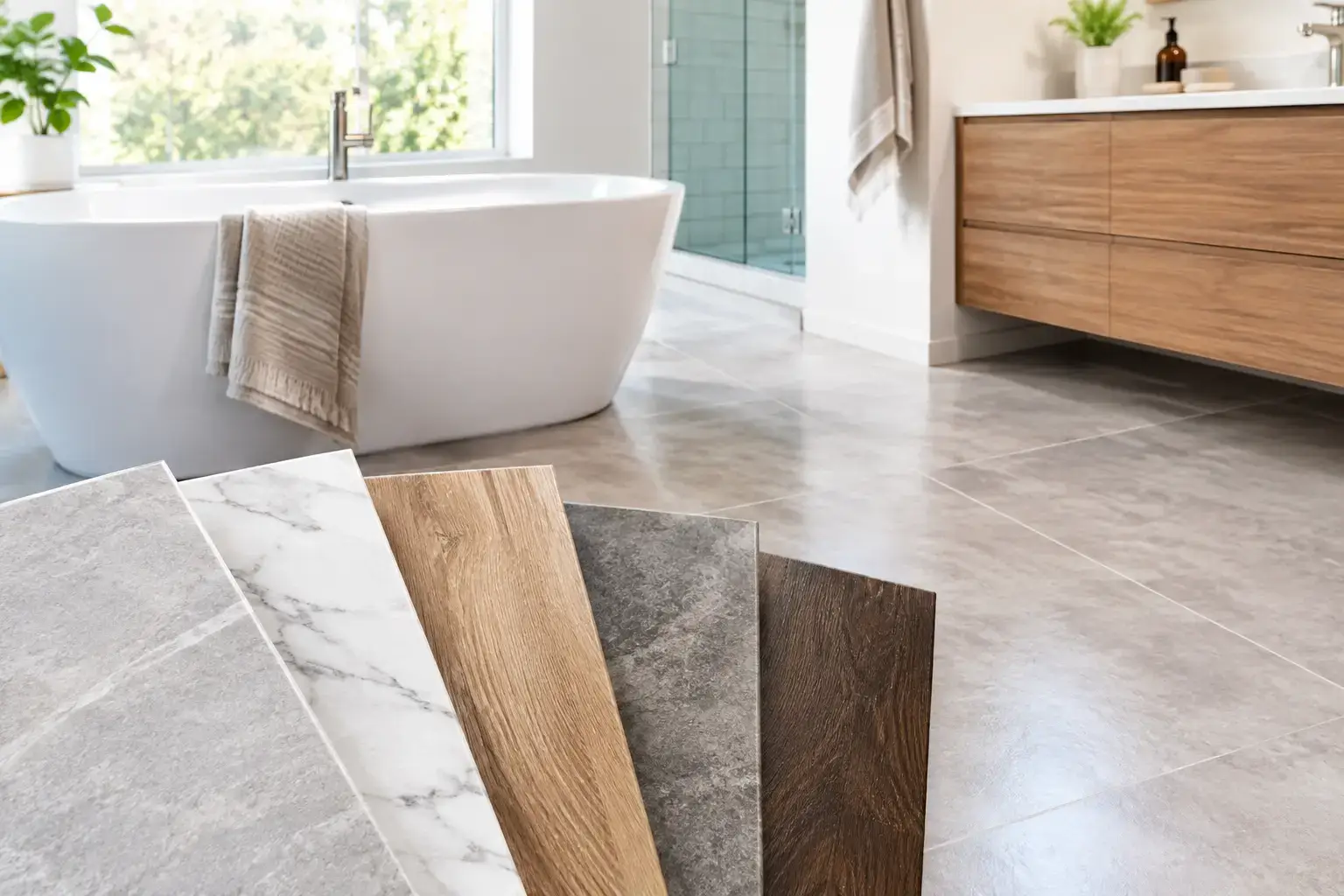
A bathroom floor has to work harder than almost any other surface in the home. It must cope with splashes, steam, bare feet, dropped bottles and daily cleaning, while still setting the tone for the room. The best bathroom flooring options balance practical performance with the finish, warmth and character you want to live with for years.
For a well-considered bathroom refurbishment, flooring should be chosen early in the design process. Its colour, scale and texture influence everything around it, from the vanity unit and brassware to wall finishes, lighting and the transition into the adjoining room. A beautiful floor is not simply a final detail. It is part of the foundation for a calm, cohesive space.
Start with how the bathroom will be used
There is no single right material for every bathroom. A quiet en-suite used by two adults can accommodate a more tactile, natural finish than a busy family bathroom shared by children. Equally, a shower room with a walk-in shower needs excellent slip resistance and thoughtful drainage, while a cloakroom may allow greater freedom to prioritise pattern or statement colour.
Consider who uses the room, how much natural light it receives and whether it will have underfloor heating. In homes across Cumbria and the Lake District, where wet coats, muddy paws and cooler mornings are familiar, easy cleaning and a warm surface underfoot often become especially valuable.
It is also worth looking beyond a small sample. Ask to see full-sized tiles or boards where possible. A finish that feels subtle in the showroom can become busy across a larger floor, while a pale stone-effect tile may bring welcome light to a compact bathroom.
Bathroom flooring options worth considering
Porcelain tiles
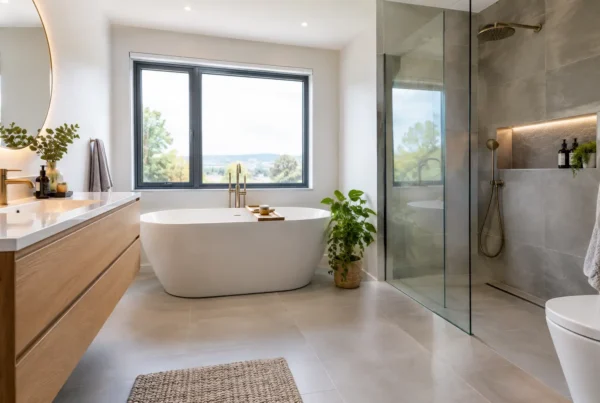
Porcelain remains one of the most popular choices for a reason. It is highly water-resistant, durable and available in an exceptional range of finishes, including convincing stone, concrete, timber and marble effects. This makes it suitable for everything from a contemporary shower room to a more traditional country bathroom.
Large-format porcelain can make a room feel more expansive because there are fewer grout lines to interrupt the floor. Smaller tiles, mosaics and patterned designs, meanwhile, can add character and provide useful grip in shower areas. A matt or lightly textured finish is usually more forgiving of water marks than a high-polish tile.
Porcelain works beautifully with underfloor heating, bringing a gentle warmth that changes the experience of stepping out of the shower. The trade-off is that it requires a sound, level subfloor and skilled installation. Tile layout, cuts around sanitaryware and grout colour all affect the finished result, so this is not a surface to treat as an afterthought.
Natural stone
Natural stone offers depth and variation that manufactured materials cannot fully replicate. Limestone, slate, marble and travertine each bring a distinct character, from relaxed rural warmth to more formal elegance. In a period property or a bathroom designed to feel connected to its landscape, stone can be particularly compelling.
It does, however, need informed specification and ongoing care. Most natural stone requires sealing, and some varieties are more vulnerable to etching or staining from toiletries and cleaning products. Honed finishes are generally more practical than polished stone in a bathroom, particularly where slip resistance matters.
Stone is an investment in both material and maintenance. When selected carefully and fitted well, it develops a considered, enduring presence. If a lower-maintenance look is the priority, porcelain stone-effect tiles can offer a persuasive alternative.
Luxury vinyl tile
Luxury vinyl tile, often known as LVT, has become a strong choice for homeowners who want comfort, resilience and a softer feel underfoot. It is available in timber, herringbone, stone and abstract designs, allowing a bathroom floor to carry the warmth of wood without the concerns associated with fitting real timber in a wet environment.
LVT is quieter and warmer than tile, and it can be a practical option for family bathrooms, en-suites and upstairs rooms. It is also comfortable for children and older family members, particularly without underfloor heating. Quality matters here: a well-made, professionally fitted product with a properly prepared subfloor will look refined and perform reliably.
The key consideration is water management. While LVT itself is water-resistant, water can find its way through poorly finished edges or joints. In a wet room or fully tiled walk-in shower area, porcelain is often the more dependable choice. For the main bathroom floor outside the shower zone, LVT can be both elegant and highly practical.
Sheet vinyl
Sheet vinyl is not always the first material associated with a luxury bathroom, but contemporary designs have come a long way. It can be a sensible choice where a continuous, water-resistant surface is needed on a modest budget, or where easy maintenance takes precedence.
There are attractive stone and tile-effect designs available, and the reduced number of joins can be useful in homes with young families. Its main limitation is visual depth. It will not provide the same tailored, high-end detail as porcelain, natural stone or a carefully laid LVT floor, but it can still be specified thoughtfully for practical projects.
Microcement and resin finishes
For a contemporary, architectural bathroom, microcement or resin can create a calm, uninterrupted surface across floors and walls. These finishes suit minimalist schemes particularly well, with their soft movement, muted colour and almost sculptural quality.
They need specialist application and careful preparation. Hairline cracking, uneven colour and inadequate sealing can compromise the effect, which is why experience matters greatly. A properly installed finish can be striking, but it is best selected for its particular aesthetic rather than simply because it has fewer grout lines.
Choose the right finish, not just the right material
Whatever material you prefer, surface finish deserves close attention. Glossy floors reflect light and can look glamorous, but they are less forgiving of water spots and may become slippery when wet. Matt finishes tend to be calmer, easier to maintain and more suitable for everyday family use.
Texture should be sufficient to provide confidence underfoot without becoming difficult to clean. This is particularly relevant in walk-in showers, where the same tile may continue from the main floor into the shower area. A knowledgeable designer can help balance a clean visual line with the practical requirements of the space.
Grout is another small decision with a large effect. Matching grout creates a quieter, more expansive appearance, while contrasting grout brings out the pattern and geometry of a tile. Pale grout can look fresh but needs more frequent care; mid-tones often offer the most forgiving option for a hardworking room.
Make the floor part of a complete design
The most successful bathroom floors relate naturally to the wider scheme. A warm oak-effect LVT can soften painted cabinetry and brushed brass. Veined porcelain might echo the worktop on a vanity unit. Deep slate can ground a bathroom with pale plaster walls and traditional fittings.
Scale matters as much as colour. Large tiles can make a compact room feel less fragmented, provided the layout is carefully planned. In a small cloakroom, a geometric encaustic-style porcelain or a herringbone LVT design can turn the floor into a feature without overwhelming the room. For generous bathrooms, a restrained material with a larger format often gives the space a more relaxed, luxurious feel.
Think, too, about thresholds and transitions. A bathroom should feel intentionally connected to the home rather than like a separate, purely functional box. The flooring choice at the doorway, the height of the finished floor and the way it meets adjoining surfaces should all be resolved before installation begins.
Installation is where longevity is decided
Even the finest flooring will disappoint if the subfloor is uneven, movement is not addressed or waterproofing is overlooked. Bathrooms need the right preparation beneath the visible finish, particularly around showers, baths and pipework. This is where an end-to-end design and installation service offers real reassurance: product selection, layout and fitting can be considered together rather than passed between separate suppliers and trades.
Allow adequate time for the floor to be prepared and for adhesives, grout or sealers to cure. Rushing this stage can lead to problems that are far more disruptive to correct later. It is also sensible to retain a few spare tiles or planks from the same batch for any future repair.
A floor should feel good every morning, not just look impressive on installation day. Choose a finish that suits the way your household lives, then give it the careful planning and fitting it deserves. The result will be a bathroom that feels composed, comfortable and beautifully your own.