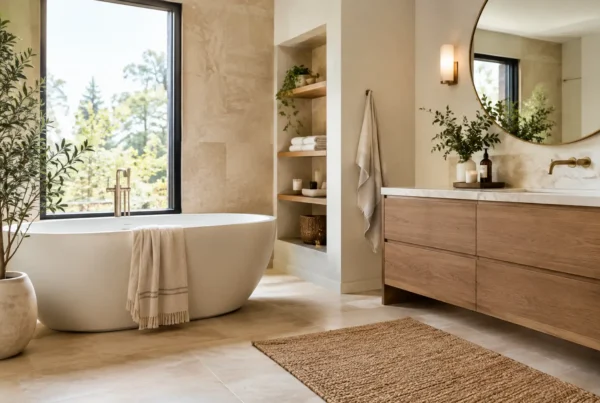

A tile can change the entire character of a room before the cabinetry, brassware or lighting has even been chosen. When weighing up porcelain versus natural stone tiles, the decision is rarely just about appearance. It is about how a floor feels underfoot on a winter morning, how it handles family life, and whether it suits the architecture and rhythm of your home.
Both materials can create a beautifully considered kitchen or bathroom. Natural stone brings variation and tactile depth that cannot be copied exactly. Porcelain offers remarkable practicality and a wide range of convincing stone-inspired finishes. The right choice comes from balancing the look you love with the care you are happy to give it.
Porcelain versus natural stone tiles: the essential difference
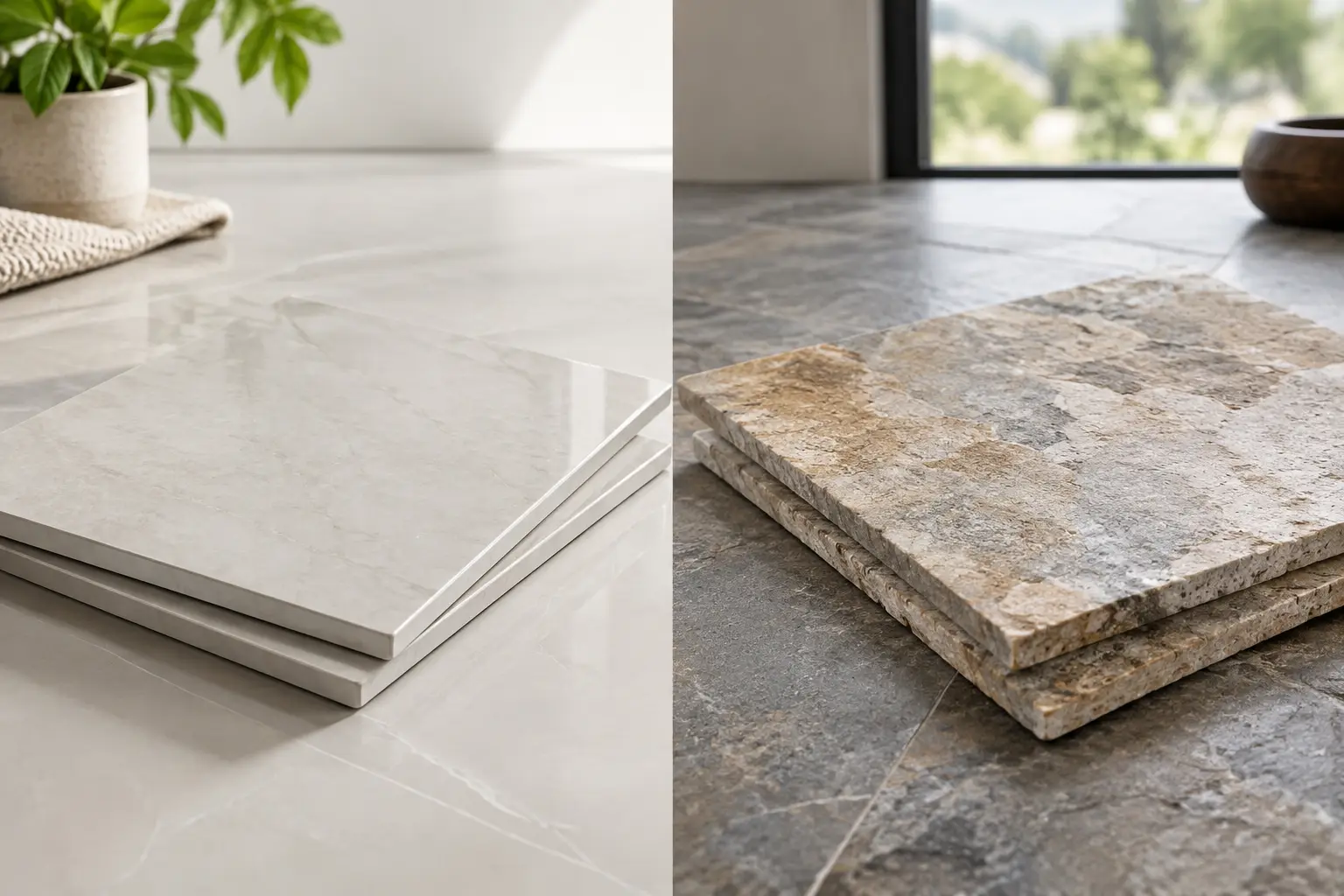
Natural stone is cut from materials formed over thousands of years, including limestone, marble, slate, travertine and granite. Each tile carries its own veining, movement, fossil detail or tonal variation. This individuality is its great appeal: a stone floor develops a presence that feels connected to the fabric of the home.
Porcelain is a man-made ceramic tile, fired at very high temperatures to produce a dense, low-porosity surface. Modern porcelain can replicate the character of limestone, marble, concrete, timber and slate with impressive realism, while also allowing for very consistent sizing, colour and finish.
Neither is inherently the more luxurious option. A carefully chosen porcelain can look wonderfully restrained and architectural in a contemporary space, while a tumbled limestone can give a period cottage or country kitchen genuine warmth. Luxury is often found in the quality of the design, the scale of the tile, the grout choice and the standard of installation.
The case for porcelain
Porcelain is often the practical choice for busy kitchens, family bathrooms and utility rooms. Its very low water absorption means it is naturally resistant to staining and moisture, so it does not generally need sealing. Spills from cooking, muddy boots and everyday bathroom products are usually straightforward to manage with routine cleaning.
It is also highly durable. A good-quality porcelain tile resists scratches, fading and wear, making it particularly well suited to entrances and open-plan kitchen-dining spaces where there is regular footfall. For homeowners who want a calm, stone-look floor without an ongoing maintenance routine, porcelain can be an excellent answer.
Design flexibility is another advantage. Large-format porcelain creates a more continuous feel with fewer grout joints, while patterned and encaustic-look designs can introduce character to a cloakroom or feature area. Stone-effect porcelain is available in finishes ranging from softly honed limestone looks to richly veined marble effects, offering a coherent scheme across kitchens, bathrooms and adjoining spaces.
There are trade-offs. Porcelain’s consistency, while useful in a contemporary design, can lack the irregularity some homeowners want from a traditional renovation. A highly printed stone-effect tile may also feel less convincing when viewed closely than a natural material. Choosing a quality range with tonal variation, a matt finish and carefully planned grout lines makes a significant difference.
Why natural stone remains so desirable
Natural stone offers depth that is difficult to reproduce. Light catches the surface differently throughout the day, subtle mineral shifts emerge across the floor, and no two tiles are ever identical. In a farmhouse kitchen, a Lake District property or a period bathroom, stone can feel like a natural extension of the building rather than a decorative layer added afterwards.
Limestone is valued for its gentle, earthy tones and relaxed elegance. Slate delivers a more textural, grounded finish, while marble can bring a refined sense of drama to a bathroom or ensuite. Travertine has a warmer, characterful appearance that works beautifully when the overall scheme calls for softness rather than polish.
Stone also ages in a way many people appreciate. With the right care, small marks and gentle wear can become part of its patina. This is not for everyone, but for homeowners drawn to authentic materials, it can make a room feel increasingly settled over time rather than simply new.
The commitment is greater. Most natural stone requires sealing to help protect it from moisture and staining, with resealing needed periodically depending on the stone, location and use. Acidic liquids such as wine, lemon juice and certain bathroom products can etch or mark some stones, particularly marble and limestone. A considered cleaning routine is essential: harsh or acidic cleaners should be avoided.
Consider the room before choosing the material
A kitchen floor has different demands from an ensuite wall. In a hardworking family kitchen, porcelain gives welcome reassurance around dropped pans, cooking spills and regular cleaning. Natural stone can still work beautifully there, but it needs homeowners who are comfortable with a little more care and a more lived-in finish.
Bathrooms are equally dependent on the specific setting. Porcelain is an easy choice for shower areas, wet rooms and family bathrooms because it is water-resistant and low maintenance. Natural stone can be used to striking effect in bathrooms, particularly on walls or in lower-traffic ensuites, but the finish and sealing specification need to be right for the location.
For floors, slip resistance deserves attention. A polished marble or gloss porcelain may look elegant, but it may not be the sensible choice for a shower room, entrance or busy kitchen. Matt, honed and textured finishes tend to offer more grip. The tile’s slip rating should be considered alongside its appearance, especially where water, pets or young children are part of daily life.
Underfloor heating, comfort and installation
Both porcelain and natural stone work well with underfloor heating. Tiles conduct heat efficiently, creating an even, comfortable warmth that is particularly welcome in bathrooms and open-plan spaces. Stone may retain warmth for longer once heated, while porcelain responds very effectively in a well-designed system.
The preparation beneath the tile matters as much as the material above it. Floors must be stable, level and properly prepared, particularly where large-format porcelain or substantial stone tiles are being fitted. Natural stone can vary in thickness and may require more careful setting-out and installation. Its weight may also need consideration in older properties or on upper floors.
Porcelain is not always the easier material to fit simply because it is manufactured. Large-format tiles can be demanding to cut and lay accurately, and narrow grout joints leave little room for error. A professional installation protects the visual impact of the tile, ensuring layouts are balanced around doorways, cabinetry, niches and focal points rather than ending in awkward slivers.
How colour, grout and scale shape the finished room
A tile is never viewed in isolation. Cabinet finishes, paint colours, natural light and metalwork all influence whether it feels warm, crisp, rustic or contemporary. A pale limestone can make a darker kitchen feel calmer and more open, while charcoal slate or deep porcelain can anchor a large, light-filled room.
Grout is particularly influential with porcelain. A colour close to the tile creates a quieter, more expansive surface, while a contrasting grout makes the format and pattern more visible. With natural stone, grout should support the material rather than compete with its variation. In both cases, samples should be viewed in the actual room and in changing daylight before making a final decision.
Tile size also affects proportion. Large-format porcelain can make a compact bathroom feel less fragmented, although very large tiles may not suit every room shape. Smaller stone tiles or a gently irregular format can bring welcome texture to a heritage property. The aim is not to follow a trend, but to choose a scale that belongs in the space.
Which should you choose?
Choose porcelain when ease of care, water resistance and a controlled, consistent finish are high on your list. It is a particularly strong option for busy households, shower rooms and contemporary schemes where clean lines matter.
Choose natural stone when you value material authenticity, tonal variation and the quiet character that develops over time. It suits homeowners who see maintenance as part of caring for a beautiful natural finish, rather than an inconvenience to avoid.
For some homes, the best answer is to use both. Porcelain may be the practical foundation for a hardworking kitchen or family bathroom, while natural stone adds distinction to a fireplace surround, feature wall, entrance or more private ensuite. The materials do not have to compete when each is used where it performs at its best.
The most successful tile choice is one you will still enjoy after years of everyday life. Seeing full-sized samples alongside your cabinetry, worktops and bathroom finishes is often the point where the decision becomes clear – not just which tile looks beautiful, but which one feels right for the home you are creating.