
A quartz granite comparison becomes most useful when you stop asking which material is simply ‘best’ and start considering how you want your kitchen to feel and function each day. Both can create an exceptional centrepiece for a bespoke kitchen, but they achieve it in different ways. One offers consistency and easy everyday care; the other brings natural character that can never be repeated exactly.
Your worktop has a larger visual impact than many homeowners expect. It connects cabinetry, splashbacks, flooring and lighting, while also taking the practical demands of cooking, entertaining and family life. The right decision should therefore balance appearance with the way you live.
Quartz vs granite: the essential difference
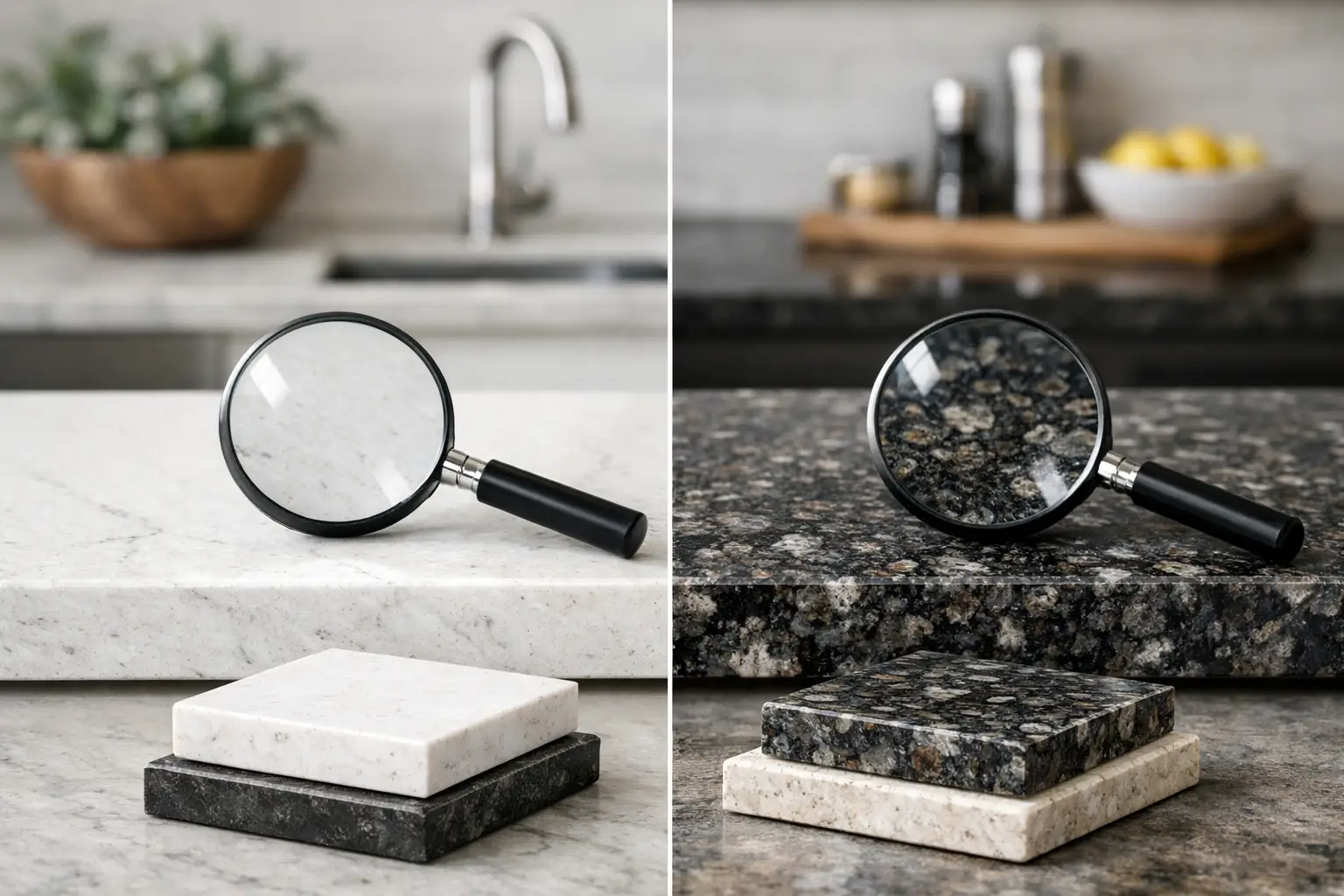
Quartz worktops are engineered stone surfaces. They are made from natural quartz combined with resins and pigments, then formed into durable slabs. This process gives designers considerable control over colour, pattern and finish, from soft, understated whites to convincing marble-inspired veining and deep contemporary tones.
Granite is a natural stone, quarried in slabs and cut for your individual kitchen. Each piece has its own mineral pattern, movement and variation in colour. Even when you select a particular granite sample, the full slab will have its own character. For some homes, especially period properties and distinctive rural kitchens, that individuality is precisely the appeal.
Neither is a lesser choice. Quartz is refined and predictable; granite is expressive and naturally individual. The better material is the one that supports the wider design of your room.
Appearance and design flexibility
Quartz is often chosen for its visual consistency. If you have a large island, long runs of cabinetry or a preference for calm, contemporary design, its even colouring can make the room feel considered and cohesive. Modern quartz designs also offer subtle veining, gentle texture and warm neutral shades that sit beautifully with timber, painted cabinetry and brushed metal details.
Because quartz is engineered, it can be easier to coordinate across a larger project. A homeowner may want a pale stone-look worktop with a matching upstand, a waterfall island end or a similarly toned vanity top in an ensuite. The dependable pattern makes those details simpler to plan.
Granite makes a stronger natural statement. Its flecks, crystals and flowing mineral movement bring depth that manufactured materials cannot copy completely. A richly patterned granite can anchor a traditional painted kitchen, while a darker, more uniform stone can look striking alongside contemporary cabinetry.
There is a trade-off. Granite variation is part of its charm, but it means viewing the actual slab matters. A small sample cannot show the full story. Where the design depends on a particular balance of veining or colour, careful slab selection and thoughtful templating will make a visible difference to the finished result.
Consider the light in your room
Cumbria and the Lake District offer extraordinary settings, but kitchens in older homes can also have limited natural light. In a north-facing room, a heavily patterned dark granite may feel more dramatic than intended, whereas a lighter quartz can lift the space. Conversely, a bright, open-plan kitchen may have enough light to carry a deep granite island with confidence.
Finishes matter too. A polished surface reflects light and feels more formal, while a honed or leathered stone finish can add a softer, tactile quality. The cabinetry colour, window orientation and lighting plan should all be considered together rather than chosen in isolation.
Everyday care and durability
For busy households, quartz has a practical advantage: it is non-porous. It does not usually need sealing, and everyday spills from oil, wine, tea or lemon are straightforward to wipe away with a soft cloth, warm water and a mild cleaner. It is a reassuring choice for a family kitchen that needs to look composed without demanding a great deal of upkeep.
Granite is also highly durable, but as a natural stone it is porous to varying degrees. It should be sealed when installed and may need resealing over time, depending on the particular stone and its use. With that protection in place, granite is perfectly suited to a working kitchen, but it rewards a little more awareness around spills and care.
Both materials are hard-wearing, yet neither is completely indestructible. Use a chopping board rather than cutting directly on the surface, and avoid harsh abrasives or strong chemical cleaners. Granite is particularly good with heat, but it is still wise to use a trivet for very hot cookware. Quartz is more sensitive to sudden or sustained heat, so pans, roasting trays and slow cookers should never be placed directly on it.
That distinction can influence the decision. Keen cooks who regularly move hot cookware around a kitchen may prefer granite’s natural heat resistance. For households where low maintenance is the priority, quartz is often the more comfortable fit.
Stains, scratches and repairs
Quartz is resistant to staining and handles normal kitchen use exceptionally well. However, it can be marked by excessive heat, and its resin content means damage cannot always be polished out in the same way as natural stone. Chips are uncommon but can happen on edges if a heavy object strikes them.
Granite resists scratching and heat very effectively. If it becomes chipped or etched, a specialist can often repair or improve the affected area, although the result depends on the stone’s colour and pattern. Its need for sealing is not a flaw, but it is a commitment worth understanding before you choose it.
For either material, a well-designed edge profile and experienced installation are vital. The area around undermounted sinks, hobs, tap holes and overhangs needs accurate fabrication and careful support. A beautiful slab is only as good as the detail in which it is fitted.
Cost: look beyond the price per square metre
A granite or quartz worktop quotation is shaped by far more than the slab itself. Thickness, colour, pattern, cut-outs, edge detailing, upstands, drainage grooves, splashbacks and the number of joins can all affect the final figure. A large island with a waterfall end will require more material and more specialist fabrication than a straightforward run along one wall.
In broad terms, both quartz and granite sit within the premium worktop category. Some granite options can be competitively priced, while rare stones and highly figured slabs can cost considerably more. Quartz has a broad price range too, particularly where designs closely resemble dramatic natural marble.
It is helpful to judge value over the lifespan of the kitchen. A worktop you enjoy looking at every morning, that works with your cooking habits and is fitted precisely around your cabinetry is a long-term part of the investment. Choosing solely on an initial material price can lead to compromises that remain visible for years.
Which worktop suits your home?
Choose quartz if you want a controlled, consistent look, simple cleaning and a broad choice of contemporary colours and patterns. It is especially effective in streamlined kitchens, family spaces and projects where you want the same finish to carry across several surfaces.
Choose granite if you value a one-of-a-kind natural material, enjoy distinctive movement and want excellent heat resistance. It can be particularly rewarding in homes where craftsmanship, heritage details and the landscape beyond the windows are part of the design story.
There are occasions when the answer is neither material alone. A kitchen may suit a hard-wearing quartz for the main preparation area, with a statement piece of natural stone on an island or dresser. The most successful rooms are not built around a trend. They are designed around the people using them.
See the material before making the decision
Photographs and small samples are useful starting points, but they cannot fully communicate a worktop’s tone, scale or texture. View larger samples beside cabinet doors, flooring and tiles where possible. Ask how the stone will be joined, where the pattern will fall across an island and what edge profile will best suit the room.
At Lakeland Bespoke Interiors, those conversations form part of creating a kitchen that feels personal rather than assembled from separate choices. Bring inspiration, practical questions and a sense of how you live at home. The right worktop will become clear when it is considered as part of the whole room, with care.