
A bathroom tile can look beautiful on a showroom display and feel entirely different once it is covering four walls, wrapping a shower enclosure or meeting a freestanding bath. Knowing how to select bathroom tiles means looking beyond the first colour or pattern that catches your eye. The right choice should bring calm, character and everyday practicality to the room for years to come.
For a bathroom refurbishment, tiles are often the surface that sets the direction for everything else. They influence the perceived size of the room, the warmth of the scheme, cleaning routines and even how safe the floor feels underfoot. A considered approach at the start makes every later decision – from brassware to lighting and vanity furniture – much easier.
Start with the room, not the tile
Before choosing finishes, consider how the bathroom will be used. A compact family bathroom has different demands from a peaceful principal ensuite, while a busy shower room needs more grip and resilience than a decorative cloakroom. Think honestly about who uses the space, how much natural light it receives and whether it is likely to be damp for long periods.
The shape of the room matters too. A narrow bathroom may benefit from a simple, continuous floor finish that draws the eye through the space. In a generous bathroom, a larger-format tile can create an elegant, uninterrupted backdrop, allowing a statement bath or bespoke vanity unit to take centre stage.
Period properties in Cumbria and the Lake District can bring uneven walls, quirky corners and lower light levels. Contemporary tiles can sit beautifully alongside original features, but the layout needs careful planning. This is where viewing samples in the actual room is far more useful than making a decision from a photograph alone.
Choose a material that suits bathroom life
Porcelain is a popular choice for good reason. It is dense, hardwearing and low-porosity, making it particularly well suited to bathroom floors, shower walls and areas exposed to regular moisture. It is also available in a wide range of convincing stone, concrete and timber-effect finishes, offering a luxurious look with straightforward upkeep.
Ceramic wall tiles can be an excellent option where a lighter material or a more decorative glaze is desired. They are generally best reserved for walls rather than high-traffic floors. Natural stone brings depth and individuality that manufactured products cannot fully replicate, but it needs appropriate sealing and ongoing care. For homeowners drawn to the quiet character of limestone, marble or slate, that maintenance can be worthwhile – provided it is understood from the outset.
The finish deserves as much attention as the material. Polished tiles reflect light and can make a darker room feel brighter, although water marks may show more readily. Matt finishes tend to feel softer and are often more forgiving in daily use. A textured surface can provide useful grip on a floor, especially within a wet area, but very rough textures may take longer to clean.
Check floor slip resistance
Floor tiles should be selected with safety in mind, particularly around showers, baths and entrances. Ask about the tile’s slip-resistance rating and whether it is suitable for a bathroom floor. A tile that feels ideal in a dry showroom may perform differently when wet, so this is not a detail to leave until fitting begins.
For a walk-in shower, smaller tiles are often a practical solution. More grout joints can provide additional grip and make it easier to form the necessary fall towards the drain. Large-format tiles can still work beautifully, but they require precise setting-out and an experienced installer to achieve a clean, functional result.
Get the scale and layout right
Tile size does not need to be dictated by room size. Large tiles can make a smaller bathroom feel more composed because there are fewer grout lines breaking up the surface. Conversely, smaller formats can add rhythm and charm, particularly in heritage-inspired schemes or on a feature wall.
What matters is proportion. A very busy mosaic across every surface can overwhelm a compact ensuite, while tiny tiles on the walls of a large bathroom may feel visually fragmented. Often, the most enduring schemes pair a calm principal tile with a more expressive secondary finish – perhaps a handmade-look wall tile in the shower, a mosaic niche or a patterned floor.
Set-out is as important as the tile itself. A balanced layout avoids narrow, awkward cuts at the most visible edges of the room. It considers where the tile lines meet the basin, window, shower screen and bath, rather than treating each wall in isolation. Taking time to plan this detail is one of the clearest differences between a bathroom that merely looks tiled and one that feels properly designed.
Decide where to create interest
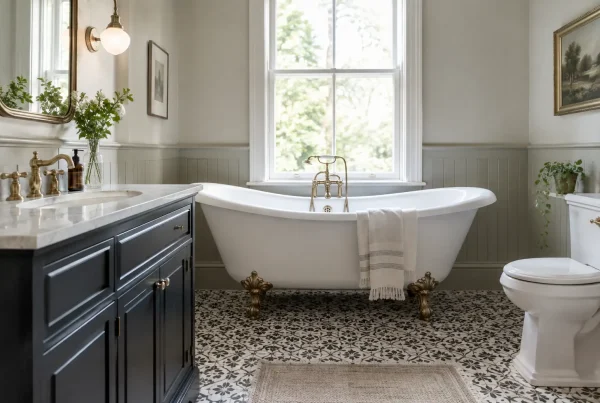
A feature tile works best when it has a clear purpose. It might define the shower zone, frame a basin wall or add a moment of colour behind a freestanding bath. Used with restraint, it gives a room personality without making the overall scheme feel dated too quickly.
If you love a strong pattern, consider keeping it below waist height on the floor or within a contained area. This lets the design make an impact while leaving enough quiet surface around it. Another approach is to choose a plain tile with variation in tone or texture, which brings visual interest in a more understated way.
Build a colour palette with longevity
Bathroom tiles are a long-term decision, so it is wise to separate passing fashion from what you genuinely want to live with. Warm whites, soft stone tones, gentle greys, earthy greens and deep blue-greens tend to work well because they have depth without becoming overpowering. The exact shade will depend on the light in the room and the colours elsewhere in the home.
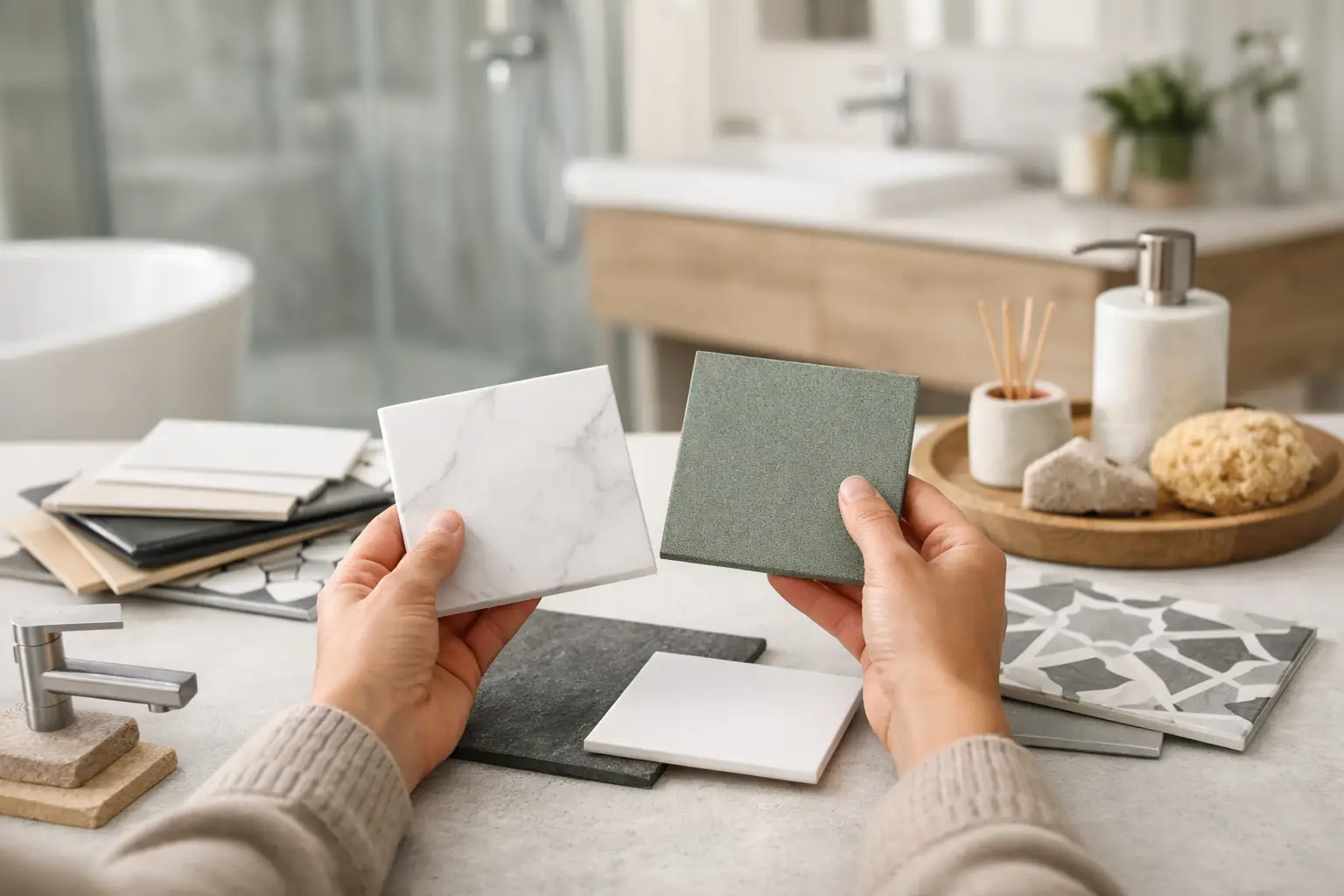
Always take samples home. Hold them next to your chosen worktop, sanitaryware, paint colours and brassware at different times of day. Cool daylight, a shaded rural aspect and warm evening lighting can each alter the appearance of a tile considerably.
A tonal scheme does not need to be flat. Combining a matt floor tile with a lightly glazed wall tile in related shades can create a layered, considered finish. If you want stronger contrast, use it deliberately: dark floors with pale walls can ground a room, while darker wall tiles can create a wonderfully intimate atmosphere in a well-lit ensuite.
Do not treat grout as an afterthought
Grout changes the final look more than many homeowners expect. A grout close to the tile colour creates a quieter, more continuous finish. A contrasting grout emphasises the shape and layout of each tile, which can look striking with metro tiles, geometric designs or carefully laid natural stone.
Practicality matters here too. Brilliant white grout can look crisp initially but may require more frequent attention on a shower floor or in a household with young children. Mid-toned grout is often a sensible, elegant compromise. The width of the grout joint should be agreed alongside the tile selection, particularly with rectified porcelain tiles where fine joints can create a sleek, contemporary result.
Plan for the details you will see every day
The most successful bathrooms resolve the small moments. Consider tile trims, external corners, recessed niches, window reveals and transitions between floor finishes before work begins. A matching trim creates a subtle finish, while a slim metal edge can echo your taps and shower fittings.
Think about underfloor heating at the same stage. Tiled floors feel particularly comfortable with gentle warmth beneath them, and this may influence the construction of the floor as well as the choice of tile. Good lighting also matters: wall lights and carefully placed downlights reveal the texture and tone of the tile far better than one central fitting.
A showroom visit can help turn individual samples into a complete scheme. At Lakeland Bespoke Interiors, tile choices are considered alongside furniture, brassware, lighting and the practical demands of installation, so the finished room feels cohesive rather than assembled piece by piece.
Let quality and fitting protect your investment
The least expensive tile is not always the most economical choice. A well-made porcelain tile, selected for the right application and fitted with care, is likely to retain its appearance for far longer than a cheaper alternative chosen without considering performance. Equally, a premium tile will not look its best if the substrate, waterproofing or setting-out has been rushed.
Ask to see full-size samples where possible, particularly for marble-effect or stone-effect porcelain. The variation across individual tiles is part of the design, and a single small swatch cannot show how the finished wall or floor will read. Ordering enough tiles from the same batch, with a sensible allowance for cuts and future repairs, also avoids frustrating differences later.
The best bathroom tile scheme is not simply the one that looks impressive on day one. It is the one that feels right on a quiet morning, stands up to family life and still gives you pleasure years after the final grout line has dried. Choose with the whole room in mind, and let each finish earn its place.