
A Victorian bathroom renovation should not feel like a museum display. The most successful schemes retain the confidence and detail of the period while making daily life markedly more comfortable: a properly heated room, generous storage, reliable water pressure and finishes that stand up to family use. The aim is a bathroom that belongs to the house, yet works beautifully for the people living in it now.
For period homes across Cumbria, the Lake District and beyond, that balance is particularly valuable. Original proportions, stone walls, high ceilings and charming but awkward layouts can all shape the design. With thoughtful planning, these characteristics become the starting point for a bathroom with real presence.
Start with the character of the room
Victorian homes were not all alike. A town terrace, a substantial detached property and a rural former rectory may share an era, but their rooms can call for very different decisions. Before choosing a tap or tile, look closely at the architecture already there: ceiling height, window position, door swing, alcoves, cornicing, fireplaces and floorboards.
A compact bathroom may benefit from restraint. A beautifully proportioned basin, wall-mounted brassware and a simple tiled backdrop can offer a stronger result than trying to introduce every period feature at once. In a larger room, a freestanding bath can become a natural focal point, especially when positioned to make the most of a window or a fireplace recess.
Original details are worth retaining where practical, but not at the expense of a room that functions well. Restoring a timber door, preserving an architrave or repairing a decorative ceiling rose can give a scheme authenticity. Conversely, a damaged floor, inadequate ventilation or poorly placed pipework should be addressed properly rather than concealed behind attractive finishes.
Choose period references, not a period pastiche
Victorian style has a recognisable language: confident geometry, crafted surfaces and fittings with visual weight. It does not require every element to be antique. A considered mix of traditional influences and modern performance usually feels more convincing, and is far easier to live with.
Create a strong foundation with tile
Tile is often the defining surface in a Victorian-inspired bathroom. Classic white metro tiles, laid in a traditional brick pattern, remain a dependable choice for walls. Their simplicity leaves space for darker grout, decorative borders or coloured paint above the tiled area. For a softer, more tailored look, consider handmade-effect tiles with subtle variation in tone and surface.
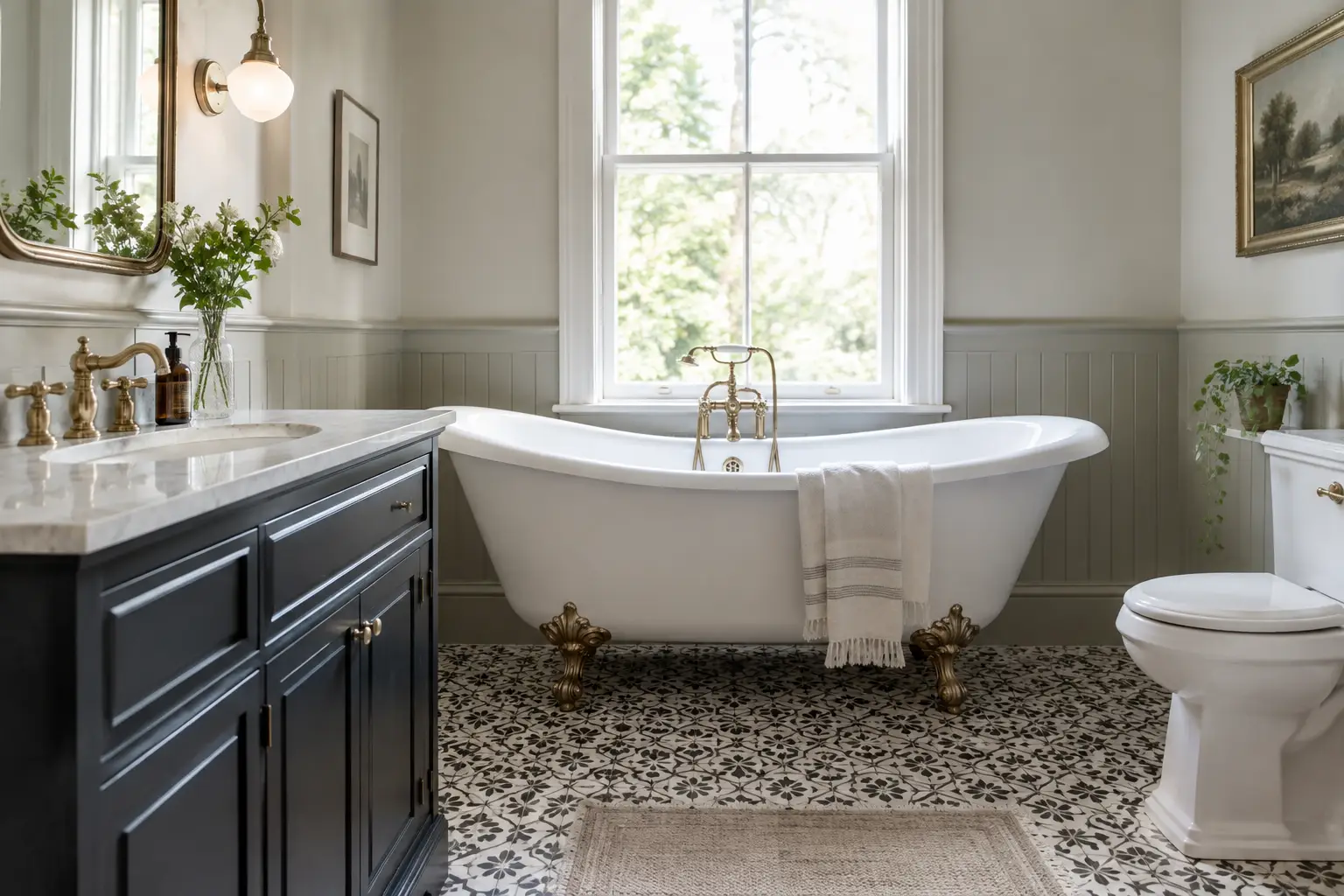
On the floor, encaustic-style patterns, small-format porcelain mosaics and chequerboard designs can introduce character without overwhelming the room. Porcelain is often the sensible choice for a busy family bathroom because it is durable and easy to maintain. Natural stone brings depth and individuality, but it needs appropriate sealing and ongoing care. The right choice depends on how the bathroom will be used, not only how it will photograph.
Keep the overall palette disciplined. Deep green, oxblood, inky blue and warm grey sit comfortably with Victorian influences, while soft chalky neutrals allow brassware and joinery to carry the detail. In rooms with limited natural light, a pale wall tile paired with a richer floor can provide the desired sense of period without making the space feel enclosed.
Select fittings with purpose
A traditional basin with a pedestal, console frame or furniture-style vanity can all work within a Victorian scheme. The decision comes down to storage and visual weight. A pedestal basin preserves a light, open feel, but offers little room for everyday essentials. Bespoke or carefully selected vanity furniture provides useful concealed storage and can introduce painted colour, timber texture or elegant fluting.
A freestanding bath remains an appealing choice in a generously sized room, particularly with a traditional bath shower mixer or wall-mounted shower arrangement. In smaller bathrooms, a fitted bath may make better use of the available space while still looking considered. A shower enclosure with slim framing, or a simple fixed glass panel, can sit more quietly within the room than an overly ornate enclosure.
Brassware should be chosen as a complete family rather than as individual pieces. Polished nickel offers a crisp, classic finish; aged brass brings warmth and depth; chrome is timeless and practical. Matt black can work, although it creates a more contemporary note and needs careful handling if the wider scheme is intended to feel authentically Victorian.
Plan modern comfort from the beginning
The hidden work determines whether a beautiful bathroom remains a pleasure to use. Older properties can have uneven floors, solid walls, restricted service routes and plumbing that has evolved in stages over many years. A clear survey and design plan help prevent unwelcome compromises later in the project.
Water pressure deserves early consideration, particularly where a large shower head, bath filler and multiple outlets are proposed. Likewise, the position of soil pipes and waste runs may influence where sanitaryware can realistically sit. Moving everything is possible in some homes, but it can add cost and disruption. Keeping key items close to existing services can release budget for better finishes, lighting or furniture.
Underfloor heating is especially welcome in a Victorian bathroom, where tiled floors can otherwise feel cold. It also reduces reliance on a large radiator, giving the layout more freedom. A heated towel rail remains useful for drying towels and adding a familiar traditional silhouette, but it should be specified to suit the heat requirements of the room rather than treated as decoration alone.
Ventilation is equally important. An effective extractor, correctly positioned and sized, protects paintwork, timber and joinery from persistent moisture. This is one area where a discreet modern solution supports the longevity of the whole design.
Let lighting do more than illuminate
Period bathrooms are often designed around a central pendant or decorative ceiling light, but that alone rarely provides enough practical light. Layered lighting gives the room a more flattering, useful atmosphere. Wall lights either side of a mirror reduce shadows for shaving or applying make-up, while dimmable ambient lighting makes an evening bath feel more restful.
Consider the room from every angle. A statement fitting can look wonderful above a freestanding bath, but fittings in bathroom zones must be suitable for the location. The safest approach is to establish the lighting plan alongside the layout, before walls are closed and tiles are installed.
Mirrors also play an important role. An arched, framed or gently bevelled mirror can reinforce the period mood, while discreet integrated illumination brings welcome convenience. This is a good example of where modern detailing can disappear into a traditional-looking scheme.
Make storage part of the design
Victorian bathrooms are often admired for their decorative detail, yet everyday clutter can quickly distract from it. Storage should be designed in from the outset, especially in family homes and shared bathrooms. A vanity unit, recessed cabinet or fitted tall cupboard can keep toiletries, cleaning products and spare towels out of sight.
If the room has an alcove, it may be ideal for shallow shelves or bespoke cabinetry. Open shelving can display folded towels, apothecary-style bottles or a small piece of art, but it needs to be edited carefully. Closed storage tends to preserve the calm, polished appearance that makes a newly renovated bathroom feel luxurious.
Avoid the common compromises
A Victorian-inspired bathroom can lose its impact when every surface competes for attention. Patterned floors, ornate wallpaper, coloured sanitaryware, dark walls and highly decorative fittings may each be beautiful, but together they can make a room feel busy. Choose one or two leading features, then let the remaining elements support them.
It is also tempting to select fittings solely for their traditional appearance. Quality matters. Taps, shower valves, furniture hinges and bath wastes are used every day, and the reassurance of well-made products and careful installation is part of a lasting renovation.
Finally, do not underestimate proportion. A large roll-top bath in a cramped room, or a tiny basin beneath a tall Victorian window, can look and feel wrong regardless of the finish. Good design is as much about circulation and scale as it is about style.
A bathroom designed and fitted with care
A refined Victorian bathroom is built through a sequence of sound decisions: respecting the building, understanding how the room will be used and selecting materials that will age gracefully. At Lakeland Bespoke Interiors, the design process brings those decisions together, from the first showroom conversation through to a carefully managed installation.
Give the room enough time at the planning stage. When every finish, fitting and practical detail has a clear purpose, a Victorian bathroom becomes more than a nod to the past – it becomes one of the most characterful and comfortable rooms in the home.