
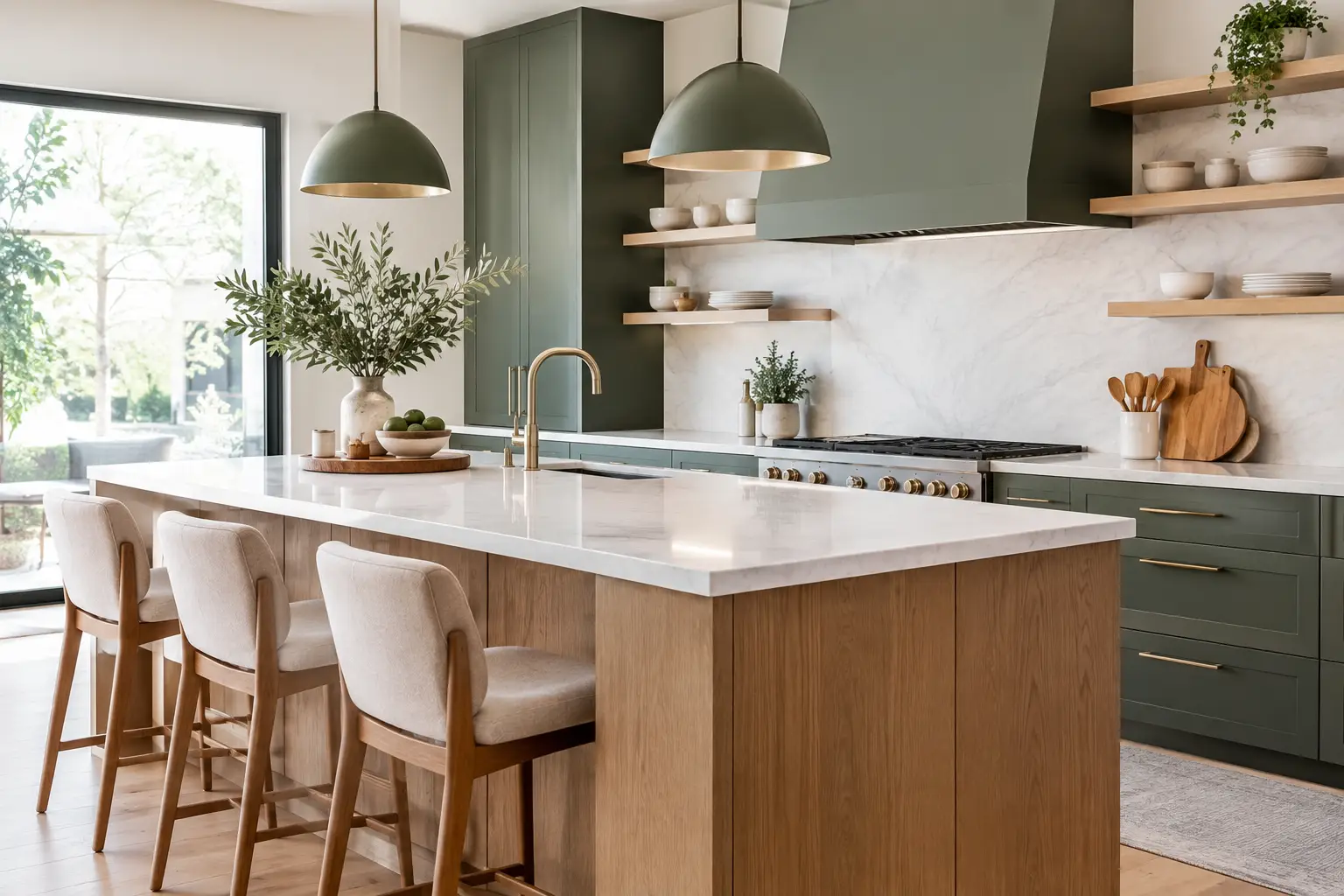
A beautiful kitchen should still feel calm when school bags land by the door, a pan is on the hob and guests arrive before the washing-up is done. That is the most encouraging part of kitchen trends 2026: the focus is moving away from show-home perfection and towards rooms that feel considered, welcoming and genuinely easy to live in.
For homeowners planning a substantial renovation, the strongest ideas are not about chasing novelty. They are about choosing materials, layouts and details that make everyday routines more enjoyable, while giving the room a quiet sense of luxury.
Kitchen Trends 2026: Warmth With Purpose
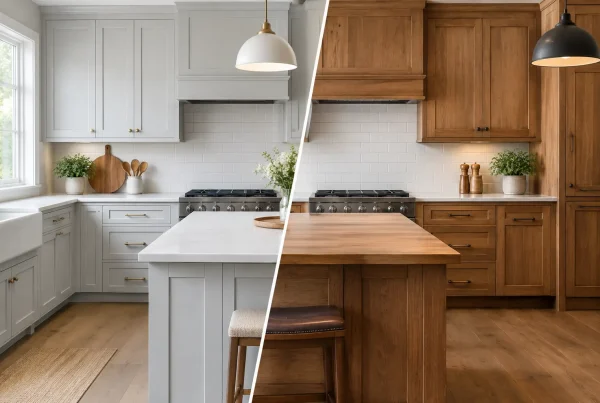
Cool grey schemes and uniform glossy finishes have had their moment. In 2026, kitchens are becoming more layered, tactile and personal. Think painted cabinetry with softly aged-looking hardware, natural timber grain, honed stone and plaster-like finishes that catch the changing light.
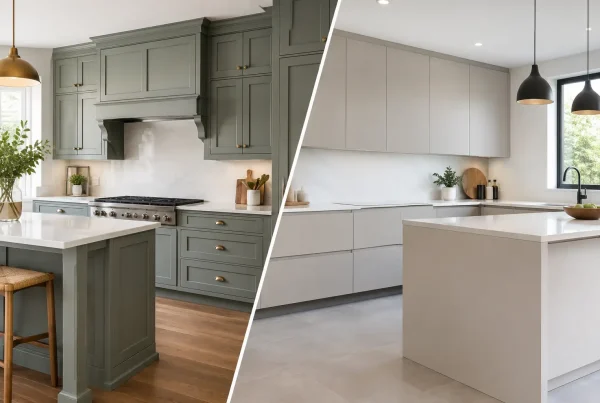
This does not mean every kitchen must be traditionally styled. Contemporary spaces are adopting warmth too, through timber-lined shelving, softly curved island ends and richly toned cabinetry. Deep olive, tobacco, mushroom, clay and inky blue are likely to remain popular because they bring depth without demanding attention.
The key is restraint. A dark kitchen can feel wonderfully cocooning in a larger room with good daylight, but may make a compact space feel enclosed. Likewise, a pale palette can feel fresh and expansive, yet needs varied texture to avoid appearing flat. The best scheme responds to the room, its orientation and how it connects with the rest of the home.
Natural materials that can be lived with
The appetite for natural materials is growing, but practicality should guide the specification. Honed stone worktops offer a softer, more relaxed appearance than highly polished surfaces, although some stones can require ongoing care and may develop a patina. For many busy households, a high-quality sintered surface or carefully selected quartz may provide the look of stone with greater day-to-day reassurance.
Timber is also returning in a more authentic way. Oak, walnut and stained timber add visual warmth to an island, pantry interior or open shelf. Used thoughtfully, they stop a large run of cabinetry from feeling overly fitted. In rural and period homes across Cumbria and the Lake District, these materials can also create a natural conversation between the kitchen and the character of the building.
A Kitchen That Works Harder, Not Louder
The most valuable kitchen trends are often the least immediately visible. Storage is becoming more tailored, and the aim is not simply to hide everything away. It is to make the items used every day easier to reach, easier to put back and less likely to crowd the worktop.
A well-planned kitchen now considers the small actions that shape the day: where groceries are unpacked, where bins sit in relation to preparation space, whether children can reach breakfast bowls, and how tea, coffee and mugs can be kept together without interrupting the main cooking area.
The return of the practical pantry
Larders and pantry cupboards continue to be highly desirable, particularly in family homes and properties where entertaining is part of the rhythm of life. A full-height pantry can house dry goods, small appliances and serving pieces behind doors, leaving the main kitchen calmer.
There is no single right answer. A walk-in pantry is a pleasure where space allows, but it should not come at the cost of useful worktop area or an awkward layout. In many homes, a beautifully organised pantry cabinet with internal drawers, shelves and power for a toaster or coffee machine delivers the same benefit in a more efficient footprint.
Concealed utility areas
Breakfast cupboards and appliance garages are evolving into more refined versions of the old utility cupboard. Behind pocket or bi-fold doors, they can contain the coffee machine, mixer, charging point and everyday clutter. Once closed, the room returns to its most composed state.
This approach works especially well in open-plan kitchens, where the kitchen is always partly on display. It is not about concealing real life. It is about giving real life a place to go when the room needs to shift from weekday function to a relaxed evening with friends.
Softer Shapes and More Sociable Layouts
Straight lines will always have a place in kitchen design, particularly when they echo the architecture of a contemporary home. Yet one of the more noticeable kitchen trends 2026 will be a move towards softer geometry. Curved island corners, rounded end panels and arched details bring ease to rooms that might otherwise feel dominated by cabinetry.
A curved end can be particularly useful around a route through the kitchen, reducing sharp corners in a busy family space. It also gives an island a more furniture-like quality, helping it sit comfortably within an open-plan room rather than appearing as a large block in the centre.
Islands themselves are becoming more purposeful. Rather than being specified as a default, they are being designed around how a household gathers. Some need generous preparation space and a clear view of the garden. Others benefit more from a peninsula that defines the kitchen without cutting off movement. In a narrow room, a run of tall storage with a large table may be more generous and sociable than forcing in an undersized island.
Seating remains important, but it deserves honest consideration. Three stools look appealing on a plan, yet the space must allow people to sit comfortably while someone moves behind them. A dining table nearby may be the better place for long breakfasts, homework and leisurely suppers.
Lighting Designed in Layers
A central pendant alone cannot carry a kitchen. The most successful schemes use several types of light, each with a distinct role. Functional lighting makes preparation safe and easy; softer lighting changes the mood once cooking is finished; decorative lighting adds character and creates a focal point.
Discreet under-cabinet lighting remains useful, particularly on darker worktops, while internal lighting in glazed cabinets or open shelves gives depth after sunset. Above an island or dining table, a sculptural pendant can introduce contrast in material or form, but it should not obstruct sightlines or overwhelm the room.
Dimmable circuits are worth planning early. They allow the same kitchen to feel bright and practical on a winter morning, then warm and intimate for dinner. This is a modest technical decision with a considerable effect on how luxurious the finished room feels.
Colour and Contrast Without a Short Shelf Life
Colour is becoming more confident, but long-lasting kitchens still need balance. A characterful cabinet colour can be a wonderful choice if you love it, rather than simply because it is appearing frequently on social media. Softer earthy shades tend to have more staying power than highly saturated colours, especially when paired with quiet worktops and natural flooring.
Contrast can be introduced through a timber island, dark bronze handles, a distinctive splashback or a painted pantry. This is often wiser than making every surface compete. A kitchen has many visual elements already: cabinetry, worktops, appliances, taps, flooring and lighting. Giving each one room to breathe creates the sense of quality.
Handleless cabinetry will continue to suit sleek contemporary interiors, while more tactile hardware is gaining ground in classic and transitional schemes. Knurled metal, aged brass and bronze can add a satisfying weight and warmth. As with all finishes, it is worth seeing samples together in the showroom and in the light of your home before making a final decision.
Technology That Earns Its Place
Technology is most successful when it solves a real irritation. Induction hobs with integrated extraction can help preserve clear sightlines, particularly where a hob sits on an island. Steam ovens, boiling-water taps and flexible refrigeration can also make daily routines more efficient.
However, a kitchen should not be fitted with technology simply because it is available. An integrated extractor may involve compromises in drawer storage beneath the hob. A boiling-water tap needs appropriate servicing and safe use around young children. Smart appliances can be useful, but their controls should remain intuitive for everyone in the household.
The right brief begins with lifestyle, not a list of features. A keen cook may value generous refrigeration, a wide hob and a second oven. A household that entertains may prioritise drinks storage, serving space and a dishwasher positioned away from the main conversation area.
Design for the Home You Intend to Keep
The most enduring kitchens in 2026 will not look as though they were designed for a single season. They will have a clear relationship with the house, enough storage for everyday life and materials chosen to age with grace.
At Lakeland Bespoke Interiors, a considered design appointment is the place to test these choices properly: to compare finishes, refine a layout and decide which trends will genuinely improve your home. Choose the details that make you pause with pleasure, but let the plan do the quiet work of making every day easier.